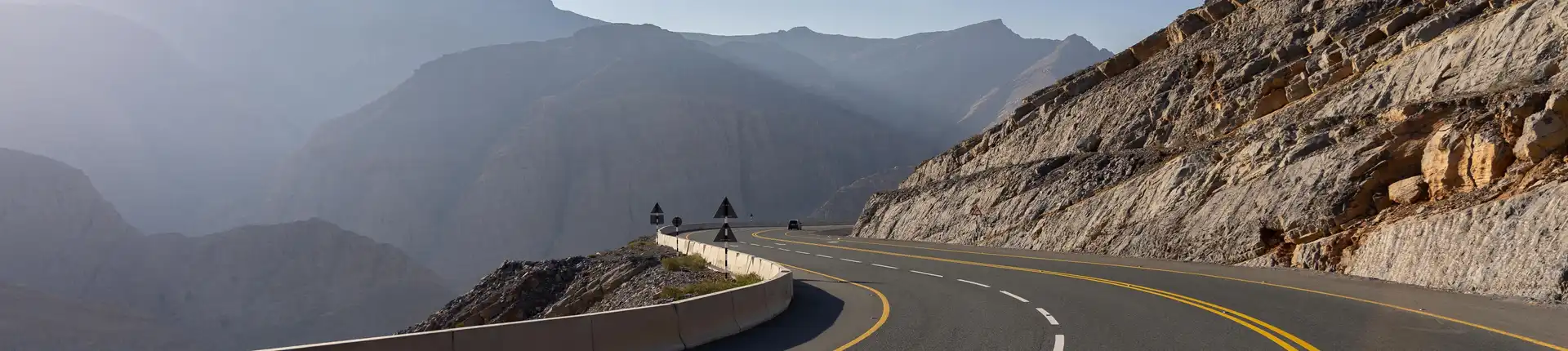
Top 10 Scenic Road Trips in the MENA Region


The MENA region may be famous for vast deserts and modern cities, but some of the region’s most impressive landscapes are best experienced from behind the wheel. Across the UAE, Oman, Saudi Arabia, and Qatar, scenic roads wind through rugged mountain ranges, follow dramatic coastlines, cross enormous sand dunes, and connect historic villages with remote natural landmarks.
A road trip also gives travelers the freedom to experience parts of the Gulf that are difficult to reach on a traditional city break. One day might take you through steep mountain switchbacks, while another could lead past turquoise wadis, sandstone formations, or quiet beaches along the Red Sea. With excellent road networks across much of the region, many of these journeys are accessible to regular vehicles, although some mountain and desert routes require a 4x4.
The cooler months generally offer the most comfortable driving conditions, while destinations such as Salalah and the highlands of Oman and Saudi Arabia can also provide memorable summer escapes. Before setting off, always check road conditions, border requirements, vehicle insurance, and weather forecasts, particularly when traveling internationally or entering mountain and desert areas.
What Makes the MENA Region Perfect for a Road Trip?
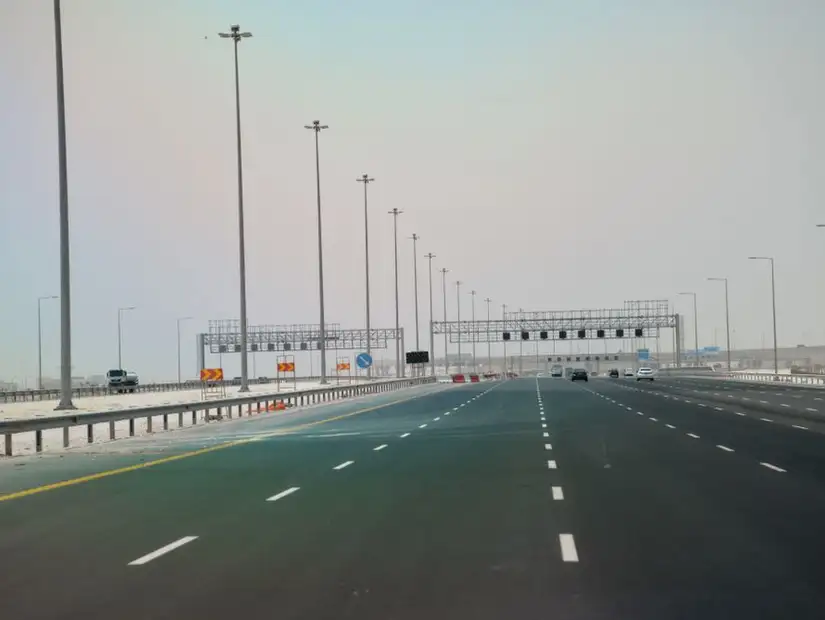
Dramatically Different Landscapes
The Gulf is far more geographically diverse than many first-time visitors expect. Within a single trip, travelers can move between sandy desert plains, mountain ranges, green oases, dramatic canyons, and long stretches of coastline.
Oman’s Hajar Mountains offer some of the region’s most impressive high-altitude drives, while Saudi Arabia combines volcanic landscapes, sandstone valleys, and green southern highlands. In the UAE, excellent mountain roads make destinations such as Jebel Jais and Khor Fakkan easy to incorporate into shorter weekend trips.
Excellent Roads Between Major Destinations
Major highways across the MENA region are generally modern and well maintained, making self-drive holidays relatively straightforward. Several scenic mountain routes have also been developed with viewpoints, rest areas, and visitor facilities.
The road to Jebel Jais, for example, climbs almost 30 kilometers into the Hajar Mountains before reaching the Jais Viewing Deck Park at approximately 1,250 meters above sea level. The paved mountain road can be accessed by regular cars as well as 4x4 vehicles.
Easy Weekend and Multi-Day Options
Not every road trip requires a full week. Routes such as Jebel Jais, Khor Fakkan, Liwa, and Zekreet work well as day trips or overnight escapes, while journeys through Oman or across Saudi Arabia are better suited to longer itineraries.
This variety makes road travel suitable for everything from spontaneous weekend plans to extended regional adventures.
The Cooler Months Are Ideal for Exploring
For most desert and low-altitude routes, the period between approximately November and April offers the most comfortable weather for outdoor stops and sightseeing.
Summer road trips require more careful planning because of high temperatures, but mountain areas and southern Oman can offer cooler alternatives depending on the season.
Top Scenic Road Trips in the MENA Region
Dubai to Jebel Akhdar, Oman
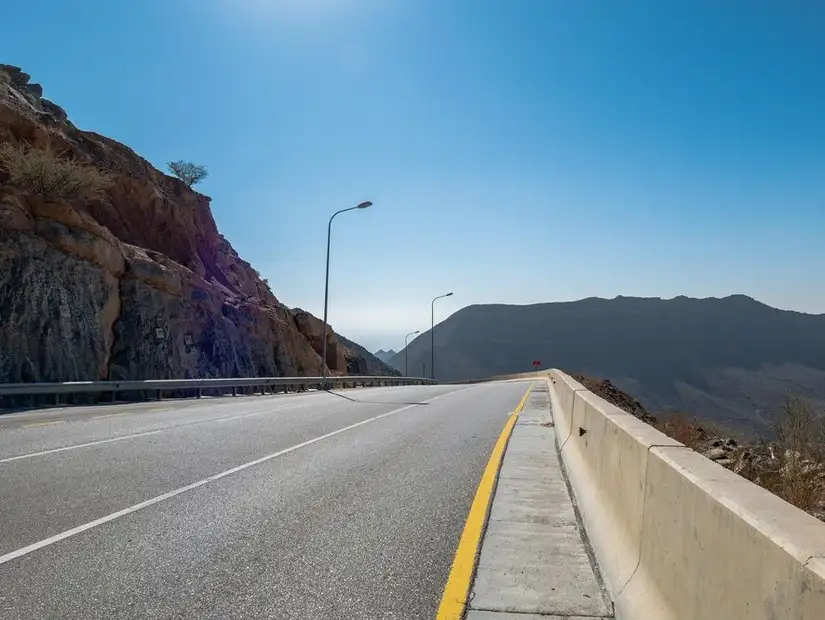
A road trip from Dubai to Jebel Akhdar combines an international drive with one of Oman’s most dramatic mountain ascents. After crossing into Oman, the landscape gradually changes from open desert to rugged foothills before climbing into the Hajar Mountains.
Jebel Akhdar, meaning "Green Mountain," is known for its steep valleys, terraced farms, traditional villages, and cooler high-altitude climate. Once on the mountain, travelers can explore villages, hiking trails, viewpoints, and seasonal rose-growing areas while enjoying temperatures that are often noticeably cooler than those at sea level.
A 4x4 is essential for the final ascent to Jebel Akhdar. Experience Oman specifically advises travelers to use a four-wheel-drive vehicle suitable for the steep mountain roads, and vehicles pass through a checkpoint before continuing upward.
Jebel Jais Mountain Road, the United Arab Emirates
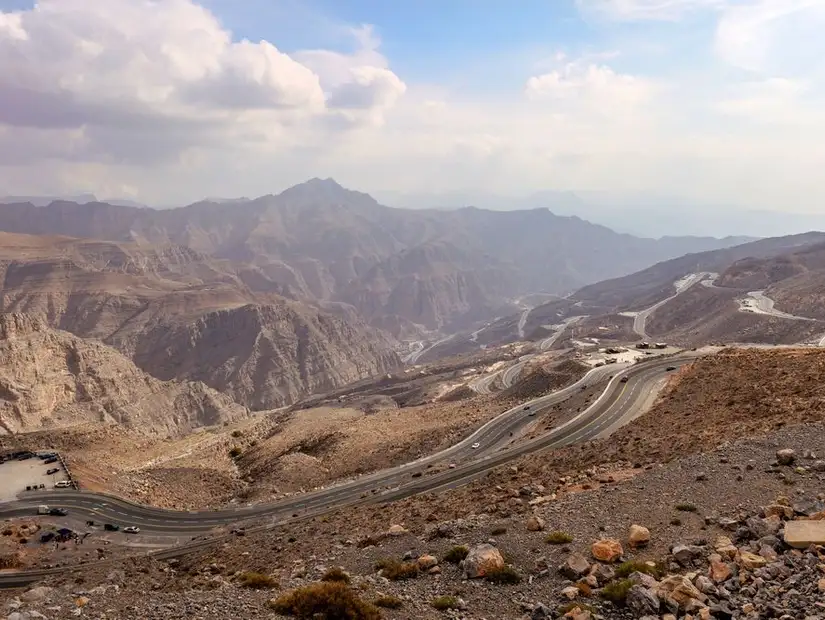
Rising above Ras Al Khaimah, Jebel Jais offers one of the UAE’s most enjoyable mountain drives. The smooth road climbs through the Hajar Mountains along a series of sweeping curves and hairpin bends, revealing deep valleys and increasingly impressive views as the elevation rises.
The drive itself is a major part of the experience. Several places along the route allow travelers to pause and take in the landscape, while the Jais Viewing Deck Park provides panoramic views across the surrounding mountains and valleys. Unlike some high-altitude routes in the region, the main paved road can be driven in a normal passenger car.
Jebel Jais is especially appealing for travelers looking for an easy day trip that combines driving with hiking, mountain dining, or adventure activities.
Muscat to Salalah via Oman’s Coastal Route
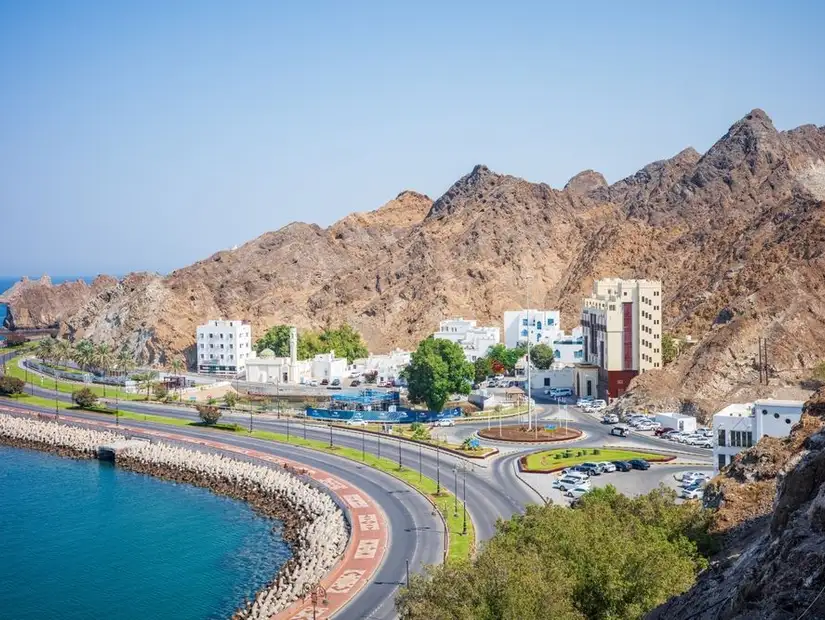
Traveling from Muscat to Salalah can be much more than a long highway drive. Instead of taking the quickest inland route south, travelers with several days available can build a scenic journey through Oman’s eastern and central coast.
A multi-day itinerary can connect Muscat with destinations such as Bimmah Sinkhole, Wadi Shab, Sur, Ras Al Jinz, Duqm, Mirbat, and finally Salalah. Oman’s official tourism itineraries also promote self-drive journeys linking these coastal destinations, transforming the trip into a road holiday rather than simply transportation between two cities.
Along the way, the scenery changes constantly. Rocky mountains meet the sea around northeastern Oman, long empty beaches appear farther south, and the landscape becomes increasingly different as travelers approach Dhofar. During the Khareef season, Salalah and its surroundings can become misty and green.
Riyadh to AlUla via Hail, Saudi Arabia
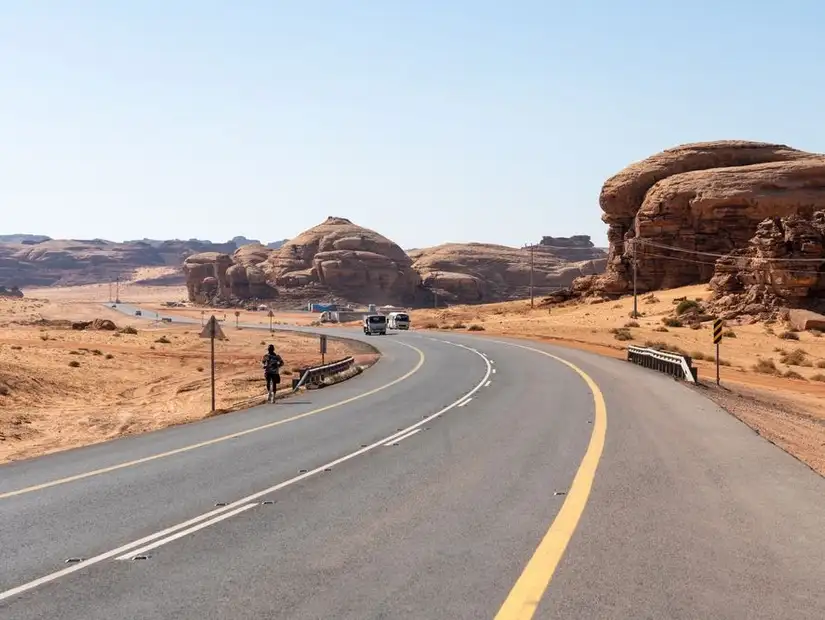
For travelers who want to understand the enormous scale of Saudi Arabia, the road between Riyadh and AlUla is an unforgettable journey through the heart of the Kingdom.
Traveling via Hail turns the route into a multi-stage adventure. The drive passes wide desert landscapes before reaching Hail, an important historic city surrounded by mountains and archaeological sites. Travelers can then continue toward AlUla, where sandstone formations rise dramatically from the desert.
Visit Saudi's road-trip itinerary places the Riyadh–Hail–AlUla journey at more than 1,000 kilometers and recommends Hail as an important stop along the way. The wider region also provides access to Jubbah, known for its ancient rock art.
Once in AlUla, travelers can explore landscapes surrounding Hegra, Elephant Rock, and Ashar Valley, where monumental rock formations create some of Saudi Arabia’s most recognizable scenery.
Taif to Abha via the Southern Highlands, Saudi Arabia
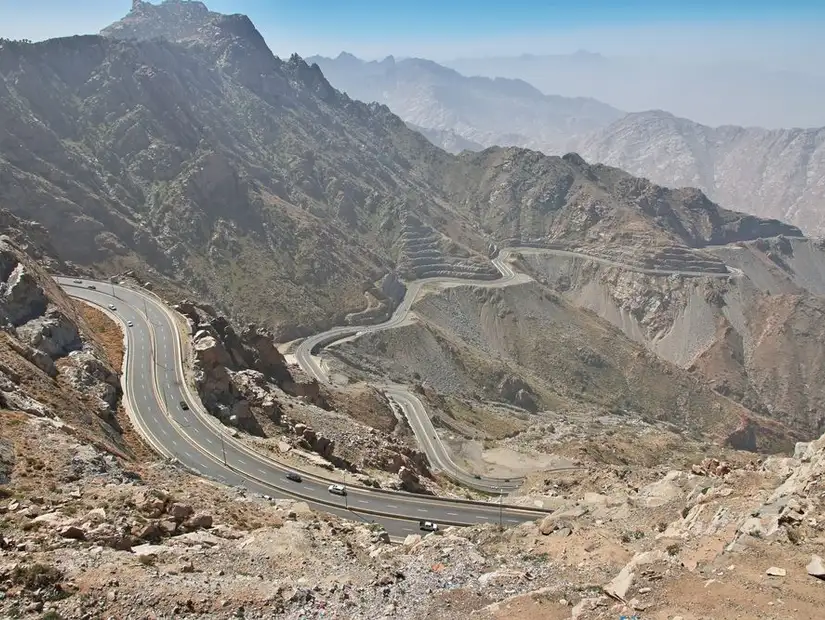
Saudi Arabia’s southwest reveals a completely different side of the country. Driving south from Taif toward Abha takes travelers through mountainous scenery, highland towns, and areas that can be significantly greener than the desert landscapes associated with central Saudi Arabia.
The journey can be extended through Al Baha and the wider Asir region, where winding roads pass through elevated terrain and traditional villages. Around Abha, travelers can continue toward mountain areas such as Soudah and explore the distinctive architecture and cultural heritage of the region. Visit Saudi highlights the Aseer Mountains, Soudah, Rijal Almaa, and panoramic highland scenery as key experiences around Abha.
Summer is particularly interesting in this part of Saudi Arabia, when altitude can bring cooler temperatures, clouds, and seasonal rain.
Abu Dhabi to Liwa Oasis and Tel Moreeb, the United Arab Emirates
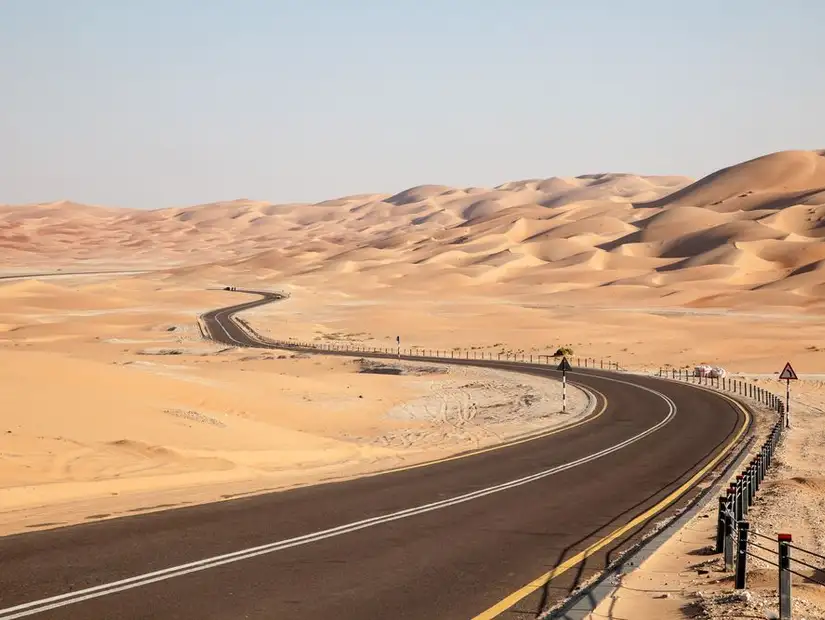
Few drives capture the scale of the Arabian desert quite like the road from Abu Dhabi toward Liwa.
As the city disappears behind you, the surroundings gradually become more remote before enormous orange and red dunes begin dominating the horizon. Liwa lies on the edge of the Rub' al Khali, or Empty Quarter, one of the largest continuous sand deserts in the world.
One of the most dramatic landmarks in the area is Tel Moreeb. The dune rises more than 300 meters and has an incline of around 50 degrees, making it famous among experienced motorsport and off-road enthusiasts.
Travelers do not need to attempt the dune itself to enjoy the landscape. The road through Liwa provides impressive views, while nearby oases and desert resorts make it possible to turn the journey into an overnight stay.
Quriyat to Sur, Oman
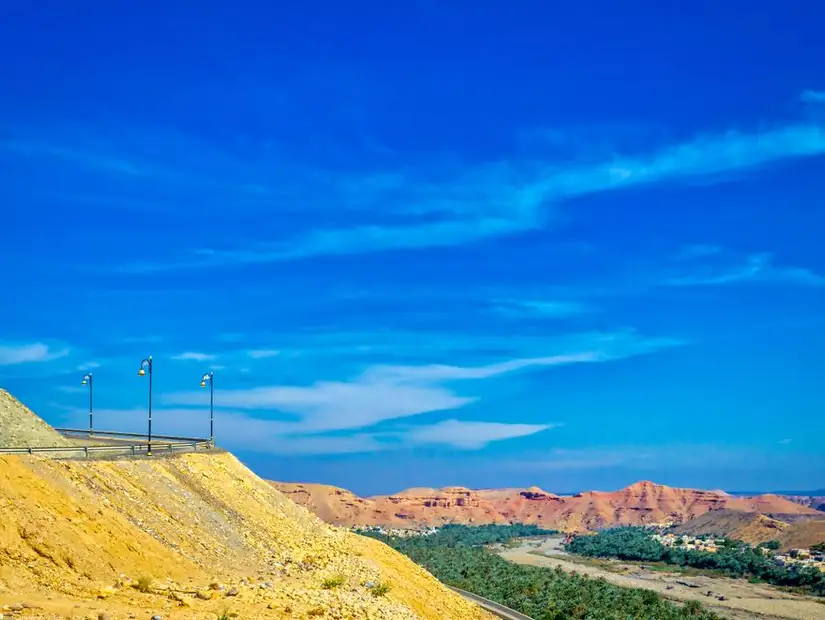
The coastal road between Quriyat and Sur packs an exceptional variety of landscapes into a relatively compact section of northeastern Oman.
Travelers can combine coastal views with some of the country's best-known natural attractions, including Bimmah Sinkhole, Wadi Shab, Fins Beach, and the valleys around Tiwi. Experience Oman also features the route through Quriyat, Wadi Shab, Bimmah, and the surrounding coastline in its self-drive itineraries.
The journey is particularly rewarding because many of its highlights are located close enough together to create a full day of exploration without spending endless hours behind the wheel. Continue farther toward Sur to see the coastal city and its long maritime tradition.
Sharjah to Khor Fakkan and Kalba, the United Arab Emirates
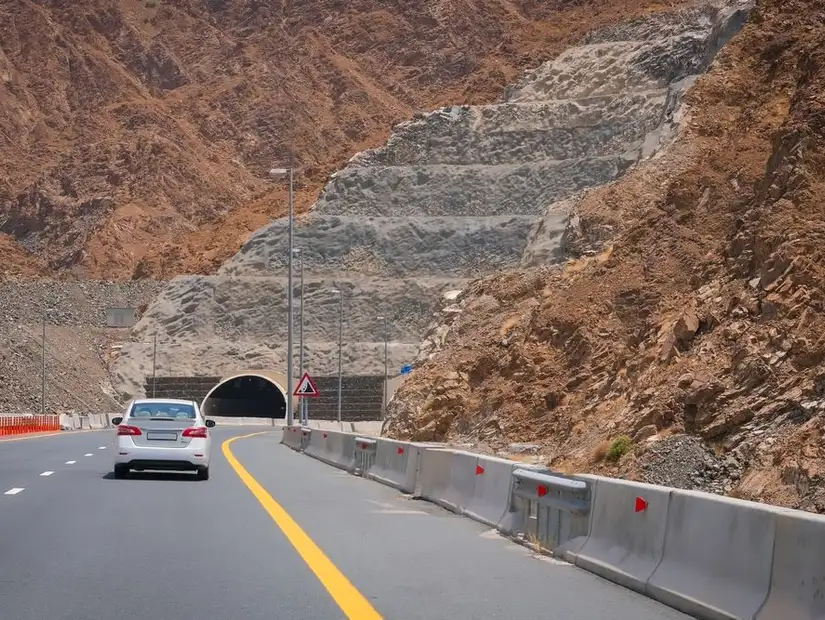
The drive from Sharjah toward the UAE’s east coast delivers a dramatic transition from city landscapes to the Hajar Mountains and Gulf of Oman.
The Sharjah–Khor Fakkan road cuts through mountainous terrain before opening toward the coast. One of the most popular stops along the way is Al Rafisah Dam, where the blue reservoir sits beneath the surrounding mountains. The newer highway has reduced driving time between Sharjah and Khor Fakkan while making the eastern region significantly easier to reach.
After exploring Khor Fakkan’s beachfront and mountain surroundings, travelers can continue south toward Kalba for mangroves, coastal scenery, and a quieter atmosphere.
The relatively short distance makes this a great option for travelers who want impressive landscapes without committing to a multi-day journey.
Jeddah to Yanbu, Saudi Arabia
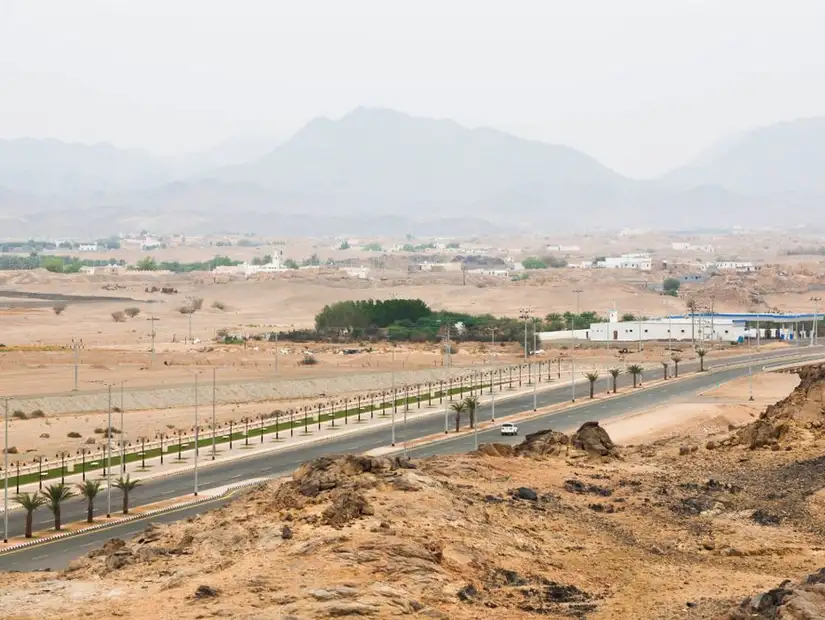
Saudi Arabia’s western coast offers a road-trip experience shaped by the Red Sea rather than the country's desert interior.
Beginning in Jeddah, travelers can first explore the historic streets of Al Balad and the city's waterfront before heading north toward Yanbu. The broader western coastal corridor connects modern developments, historic communities, and areas known for snorkeling, diving, and marine activities. Visit Saudi also features a western journey connecting Jeddah with coastal destinations before continuing to Yanbu.
Yanbu itself combines a long maritime history with beaches, waterfront areas, and access to the Red Sea. For travelers interested in diving, seafood, or a slower coastal atmosphere after time in Jeddah, it makes a natural road-trip destination.
Doha to Zekreet Peninsula, Qatar
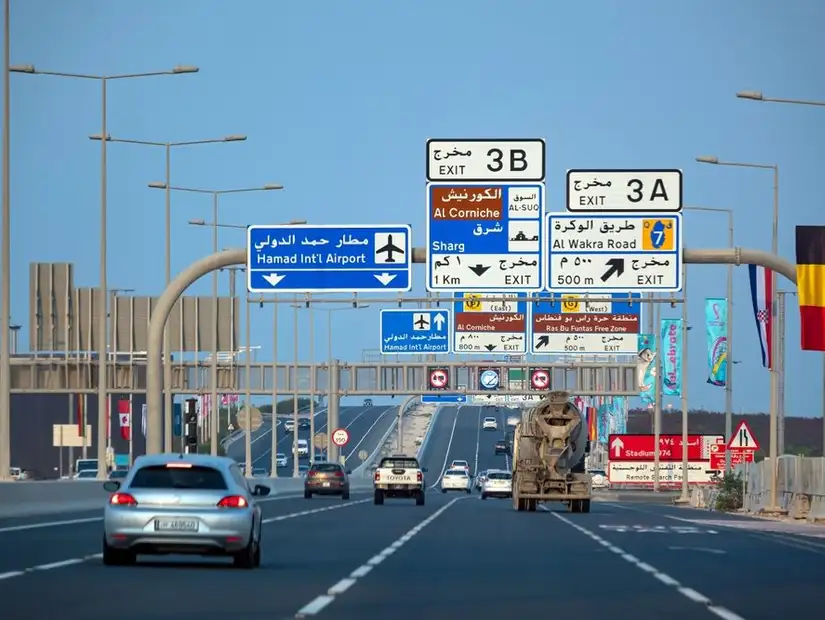
A short drive west of Doha leads to one of Qatar’s most unusual desert landscapes.
Zekreet, also known as the Ras Abrouq area, is known for limestone formations sculpted into unusual shapes by natural erosion. The landscape feels remote despite being reachable from the capital and combines rocky desert terrain with quiet coastline, wildlife areas, and outdoor art.
Visit Qatar places Zekreet Beach approximately 90 kilometers from Doha. A standard vehicle can reach the area, although a 4x4 provides greater comfort when exploring beyond the main roads.
The route is ideal for a half-day or full-day escape from the city and offers a sharp contrast to Doha’s modern skyline.
Best Time for a Road Trip
UAE and Qatar Desert Routes
- Best Time: November to March
- Weather: Mild daytime temperatures make outdoor stops, desert viewpoints, and walking much more comfortable.
- Good for: Jebel Jais, Liwa, Khor Fakkan, and Zekreet.
Oman
- Best Time: October to April for most road trips
- Weather: Cooler conditions are ideal for wadis, mountains, and coastal drives.
- Seasonal Exception: Salalah offers a completely different experience during the summer Khareef period.
Saudi Arabia
- Best Time: November to March for Riyadh, AlUla, and western desert routes.
- Summer Option: The higher elevations around Abha and the Asir region can offer cooler conditions than central Saudi Arabia.
Mountain weather can change more quickly than conditions at sea level, so always check the forecast shortly before departure.
Cross-Border Driving Checklist for Road Trips
International road trips require more preparation than domestic drives. Requirements differ according to your nationality, residency status, vehicle ownership, insurer, and border crossing, so always confirm the latest rules with the relevant authorities before traveling.
Before a cross-border journey, check that you have:
- A valid passport and required visa or entry permission
- A valid driving license accepted in the destination country
- Vehicle registration documents, often referred to as Mulkiya in parts of the Gulf
- Cross-border vehicle insurance
- Permission to take the vehicle abroad when required, particularly for rental, company-owned, or financed cars
- Emergency and roadside-assistance contact details
- A spare tire and basic emergency equipment
- Offline navigation or downloaded maps
- Water, a phone charger, and essential supplies for remote routes
For vehicles traveling between participating Arab countries, cross-border third-party insurance may be documented through the Orange Card system. The Omani Unified Bureau describes the Orange Card as insurance designed for vehicles crossing borders between participating Arab countries.
Sedan or 4x4: Which Vehicle Do You Need?
A 4x4 can be useful on GCC road trips, but it is not necessary for every scenic journey. Regular cars are generally suitable for paved routes such as Jebel Jais, Khor Fakkan, major Saudi highways, and the main road toward Zekreet. A 4x4 becomes necessary or strongly recommended when routes involve steep controlled mountain roads, loose gravel, desert tracks, or off-road sections.
Jebel Akhdar is an important exception because a 4x4 is required for the mountain ascent. Even when driving a 4x4, travelers without off-road experience should avoid entering deep desert terrain alone. Joining an experienced guide is considerably safer when dune driving or traveling far from paved roads.
Practical Tips for a Scenic Road Trip
- Start with a full tank: Fuel stations can be widely spaced on long desert routes, especially once you leave major cities.
- Download offline maps: Mobile coverage can become weaker in remote mountain, desert, and coastal areas.
- Check your tires before departure: Heat, long-distance highway driving, and mountain roads can put additional pressure on tires.
- Avoid unnecessary night driving: Animals, changing road conditions, and reduced visibility can make remote routes more challenging after dark.
- Carry plenty of water: This is important even during the cooler months.
- Check weather conditions: Heavy rain can affect wadis and mountain roads, while fog may reduce visibility at higher elevations.
- Plan realistic daily distances: A scenic road trip should include enough time to stop, walk, eat, and explore rather than spending the entire day driving.
- Respect protected areas: Avoid driving off designated tracks or disturbing dunes, wildlife habitats, wadis, and archaeological landscapes.
Frequently Asked Questions
- What are the best GCC road trips for a long weekend? Jebel Jais, Khor Fakkan and Kalba, Liwa Oasis, Zekreet, and the Quriyat–Sur coast are all suitable for shorter trips. Travelers with three or four days can also consider a UAE–Oman journey depending on border requirements.
- Do I need a 4x4 for road trips in the MENA region? Not for most paved scenic routes. Standard vehicles can access destinations such as Jebel Jais and the main Zekreet route, while a 4x4 is required for the ascent to Jebel Akhdar and is strongly recommended for genuine off-road desert driving.
- What is the best time of year for a road trip? November to March generally provides the most comfortable temperatures for desert and coastal journeys. Oman and Saudi Arabia also have high-altitude destinations that can be attractive outside the traditional winter season.
- Can I take a rental car across GCC borders? It depends on the rental company and destination. Some companies prohibit international travel, while others require advance approval, additional insurance, or specific documentation. Always request written confirmation before planning a cross-border journey.
- Is it safe to drive long distances through the MENA region? Major road networks are generally modern, but remote driving requires preparation. Keep your vehicle maintained, carry water, check fuel stops in advance, monitor weather, and avoid unplanned off-road driving in isolated areas.
- Which road trip is best for mountain scenery? Jebel Akhdar and Jebel Jais are excellent choices for dramatic mountain roads. Saudi Arabia's Asir highlands also offer a very different landscape, with elevated terrain, seasonal greenery, and traditional mountain communities.
From dramatic mountain switchbacks in Oman and the UAE to Saudi Arabia's immense desert highways and Qatar's unusual limestone landscapes, the offers road trips for almost every kind of traveler. Some can be completed in an afternoon, while others become unforgettable week-long journeys across several regions.
The key is to leave enough time for the places between your starting point and final destination. Stop at the viewpoints, explore small towns, spend a night in the mountains, and take the slower coastal route when time allows. In this part of the world, the drive can be just as memorable as the destination.
Ready to plan your next adventure? Find flights to the region's best road-trip starting points and discover exclusive prices and special offers with WINGIE.
You may also like:
- Top 10 Cultural City Breaks in the MENA Region
- Top 10 Nature Escapes in the MENA Region
- Top 10 Ancient Wonders in the MENA Region
- Top Museums for Children in the MENA Region
- An Ultimate Guide to Henna Art in the MENA Region
- Top Spots for Urban Night Photography in the MENA Region
- Top Green Hotels and Resorts in the MENA Region for Eco-Friendly Stays
- Top Libraries in the MENA Region
- Top Spice Souqs in the MENA Region
- The Most Famous Castles in the MENA Region
- The Most Beautiful Natural Wonders in the MENA Region
- Top Camping Destinations in the MENA Region
- Top 10 Family-Friendly Destinations
- Top Oases in the MENA Region
- Top Destinations for the Eid Holiday in the MENA Region
- Top Archaeological Destinations in the MENA Region
- Top Diving Destination in the MENA Region
- Top Desert Safari Destinations in the MENA Region
- Top 10 Island Escapes in the MENA Region

