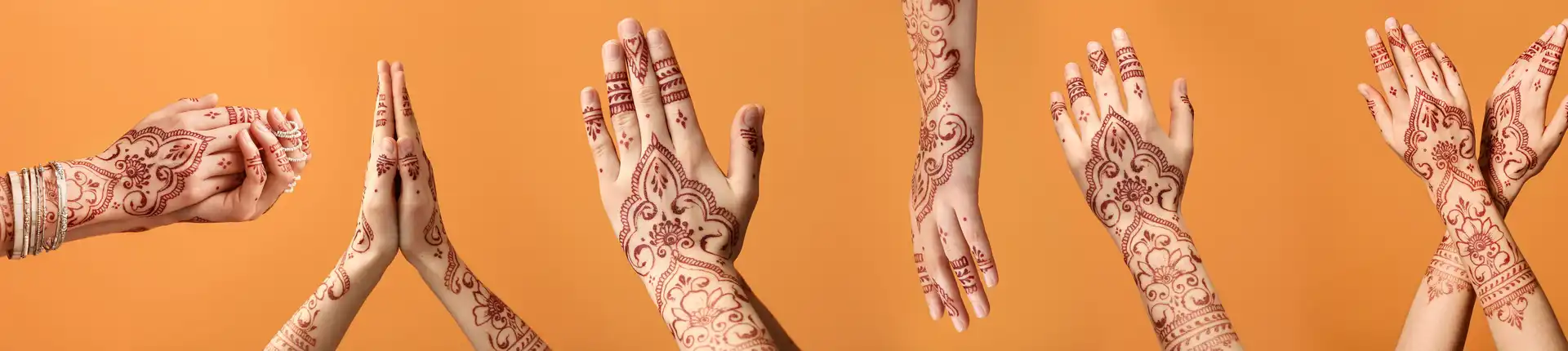
An Ultimate Guide to Henna Art in the MENA Region


A delicate floral pattern on a bride’s hand, a geometric design drawn during a festival, or a simple palm decoration created while traveling through the Middle East: henna is much more than a temporary mark on the skin.
For centuries, henna has been part of celebrations, family traditions, and cultural rituals across the Middle East, North Africa, and South Asia. Each design carries traces of history, regional identity, and personal expression.
For travelers, experiencing henna art offers a unique way to connect with local traditions. Behind every line, flower, and pattern is a story shaped by generations of craftsmanship. From Gulf wedding celebrations to North African geometric styles, understanding the meaning behind henna designs reveals a deeper side of Middle Eastern culture.
The Origins: How Henna Became a Middle Eastern Tradition
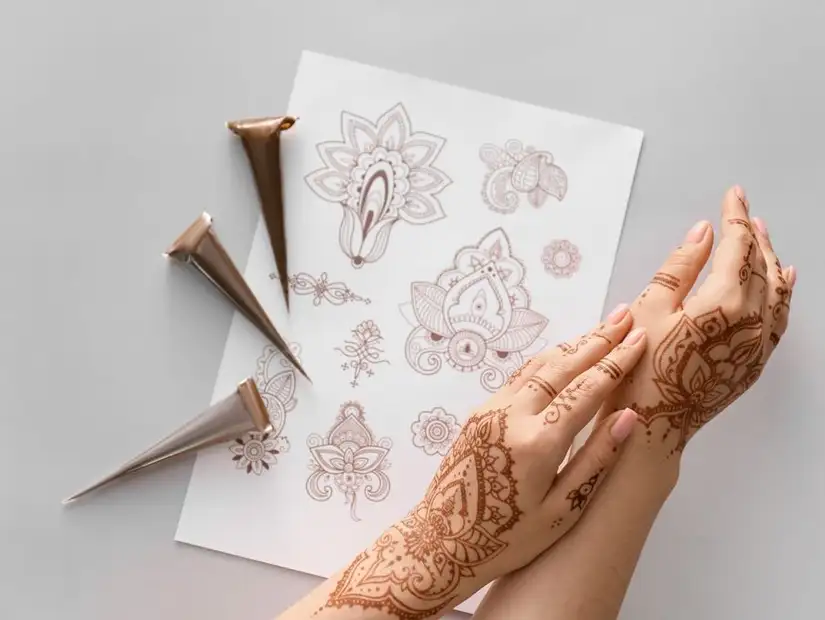
The history of henna stretches back thousands of years. The dye comes from the leaves of the Lawsonia inermis, a flowering shrub that grows naturally in warm climates. Once the leaves are dried and ground into powder, they are mixed into a paste that leaves a temporary stain on the skin.
Henna has been used across different civilizations for body decoration, celebrations, and traditional practices. Its popularity throughout the Middle East developed partly because the plant grows well in hot climates and because the paste creates a cooling sensation when applied to the skin.
In desert regions, including communities across Arabia, henna was valued not only for decoration but also as part of everyday cultural practices.
Over time, it became closely connected with important moments in life:
- Weddings
- Religious celebrations
- Family gatherings
- Festivals
- Personal beauty rituals
Today, henna remains a living tradition, passed from one generation to another.
Decoding the Symbols: What Do Henna Patterns Mean?
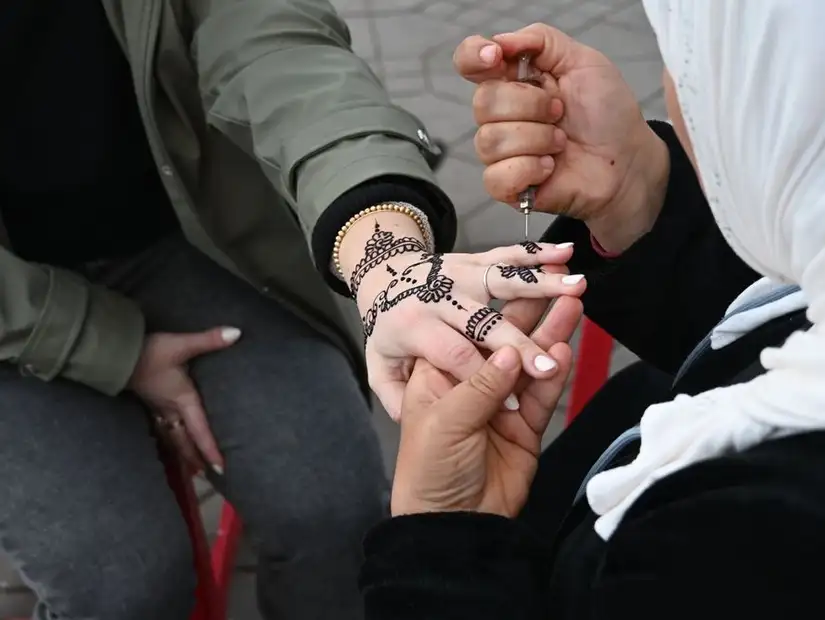
One of the most fascinating parts of henna art is that designs are rarely random. Artists combine shapes, natural elements, and repeating patterns to create compositions that reflect beauty, celebration, and personal meaning.
However, it is important to remember that meanings are not universal. A flower, line, or symbol may represent different things depending on the region, family tradition, or artist’s interpretation.
Henna traditions across the Middle East and North Africa are diverse. While styles often influence each other, each region has developed its own visual language.
Gulf Henna (Khaliji Style)
Traditional Gulf henna, often associated with the Arabian Peninsula, is known for:
- Fine floral details
- Flowing vines
- Elegant curves
- Dense patterns covering parts of the hands and feet
In Gulf countries, henna is especially connected with weddings and celebrations. Designs often emphasize femininity, beauty, and elegance. A typical Khaliji-style design may feature delicate flowers spreading across the fingers and palm, creating a balanced combination of empty space and detailed artwork.
Moroccan and North African Henna
North African henna traditions often feature stronger geometric influences. Common characteristics include:
- Symmetrical shapes
- Repeating patterns
- Bold lines
- Symbolic geometric compositions
Moroccan designs frequently reflect influences from local crafts, architecture, and decorative arts. While Gulf styles often emphasize flowing botanical designs, North African styles may appear more structured and geometric.
The Symbolism Behind Henna Designs
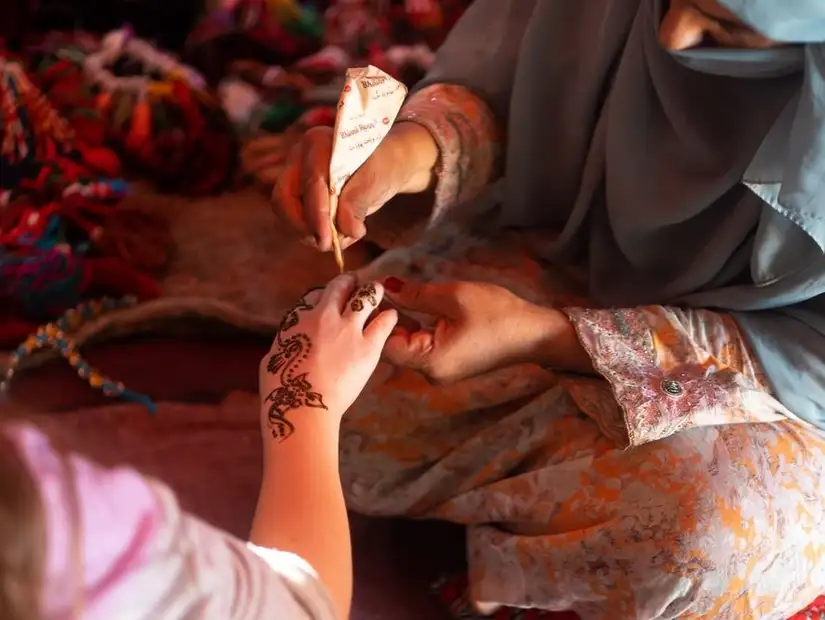
Henna patterns are often connected with ideas of celebration, blessings, and beauty. Some common interpretations include:
Flowers and Leaves
Floral motifs are among the most popular henna elements.
They are often associated with:
- Beauty
- Growth
- Renewal
- Joy
Because flowers represent nature and abundance, they are especially common in wedding designs.
Vines and Flowing Patterns
Curved vines and interconnected designs can symbolize continuity, connection, and the idea of life unfolding. Their flowing movement also allows artists to create designs that naturally follow the shape of hands and arms.
Protective Motifs
Across many cultures, certain patterns have been associated with blessings and protection from negative energy, including beliefs connected with the “evil eye.” The specific symbols and meanings vary greatly by location, but the broader idea of henna bringing positivity and good wishes is common in many traditions.
The Night of Henna: A Celebration Before the Wedding
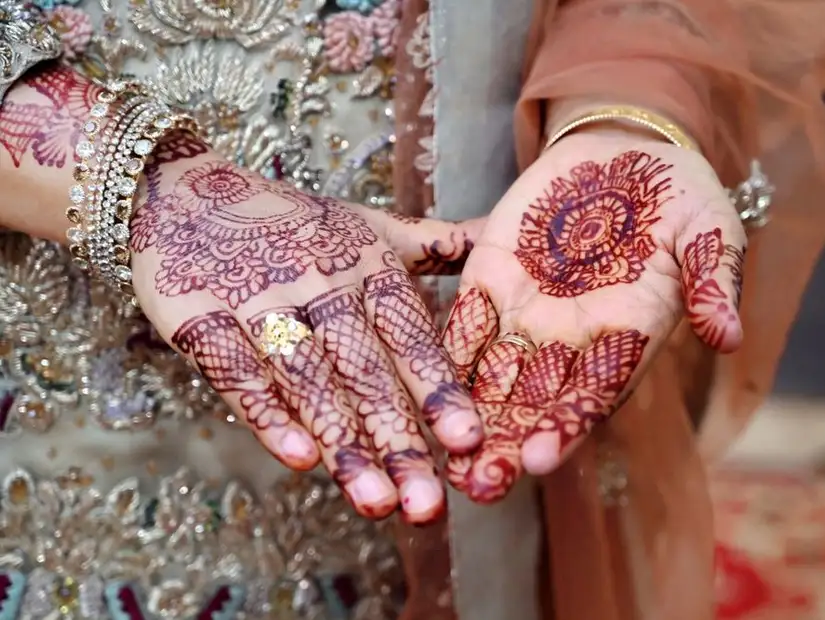
In many Middle Eastern communities, henna is most strongly associated with weddings. Known by different names across regions, including Henna Night and Ghumra in parts of the Gulf, the celebration traditionally takes place before the wedding ceremony. It is a gathering where family and friends come together to celebrate the bride and prepare for a new chapter of life.
The event may include:
- Traditional clothing
- Music and dancing
- Family blessings
- Decorative rituals
- Professional henna artists creating intricate designs
In Gulf households, Henna Night can be an important cultural moment where traditions are shared between generations. The bride’s henna is often created carefully and can take several hours depending on the complexity of the design.
A Traveler’s Safety Guide: Natural Brown Henna vs. Black Henna
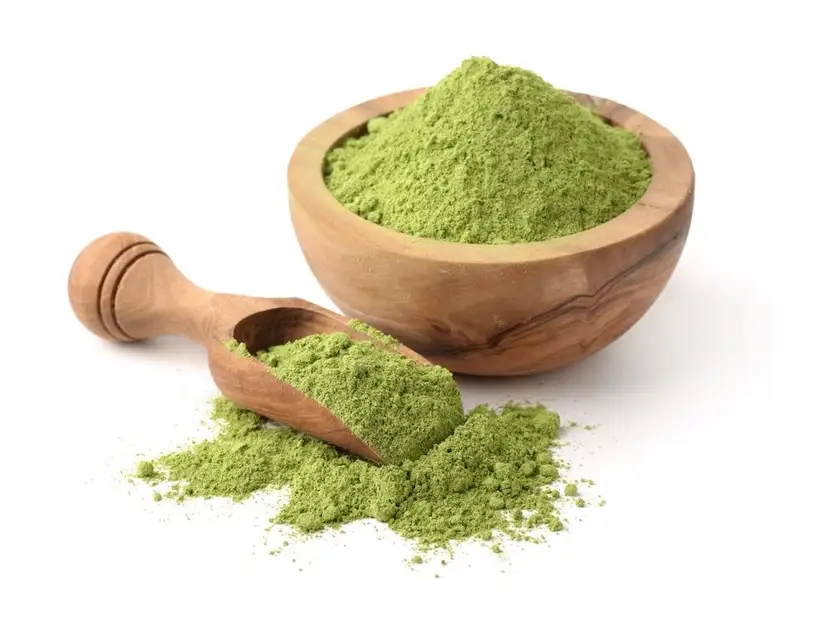
For visitors experiencing henna for the first time, understanding the difference between natural henna and unsafe alternatives is essential.
Natural Henna
Pure henna typically creates stains ranging from:
- Orange
- Rust
- Reddish brown
- Deep brown after several days
The color develops gradually as the stain oxidizes after application.
A natural henna design usually requires patience. The paste is applied, left to dry, and then removed to allow the color to deepen over time.
Why You Should Avoid Black Henna
Travelers may encounter products marketed as “black henna,” especially in tourist areas.
However, many black henna products contain para-phenylenediamine (PPD), a chemical dye that can cause serious allergic reactions, including:
- Skin irritation
- Blistering
- Chemical burns
- Long-term sensitivity
A safer approach is to ask whether the artist uses natural henna only.
Warning signs of black henna:
- A very dark stain appearing within hours
- Strong chemical smell
- Claims that the design will become “jet black”
- Unusually fast application and coloring process
Natural henna does not create an instant black stain.
Experiencing Henna Culture as a Traveler
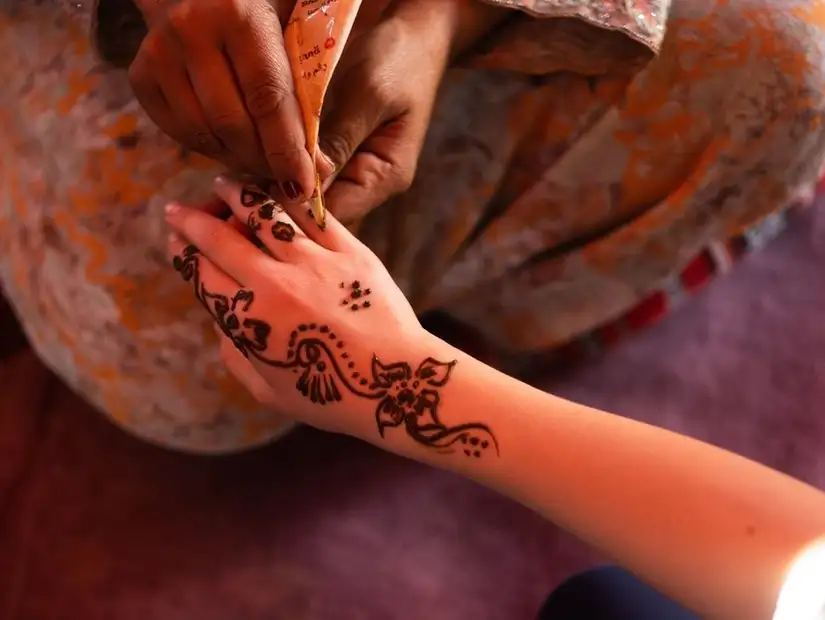
Henna is one of the most accessible cultural experiences for visitors because it connects directly with local craftsmanship.
You can experience henna through:
- Cultural festivals
- Heritage villages
- Traditional markets
- Local craft events
- Wedding-related cultural experiences
Henna is a reminder that traditions are not only preserved in museums. They live through people, celebrations, and everyday creativity. From the detailed floral patterns of Gulf weddings to the geometric designs of North Africa, henna tells stories of identity, celebration, and connection.
For travelers exploring the Middle East, experiencing this art form offers a deeper understanding of the region’s cultural heritage. Ready to discover the traditions, flavors, and stories of the Middle East? Plan your cultural journey with WINGIE and explore the living heritage of the region.
You may also like:
- Top Spots for Urban Night Photography in the MENA Region
- Top Green Hotels and Resorts in the MENA Region for Eco-Friendly Stays
- Top Libraries in the MENA Region
- Top Spice Souqs in the MENA Region
- The Most Famous Castles in the MENA Region
- The Most Beautiful Natural Wonders in the MENA Region
- Top Camping Destinations in the MENA Region
- Best 15 Cities in Morocco to Visit
- Top 10 Family-Friendly Destinations
- Top Amusement Parks in Lebanon
- Top Attractions in Jordan
- Top 10 Restaurants in Cairo
- Top Oases in the MENA Region
- Top Destinations for the Eid Holiday in the MENA Region
- Top Archaeological Destinations in the MENA Region
- Top Diving Destination in the MENA Region
- Top Desert Safari Destinations in the MENA Region

