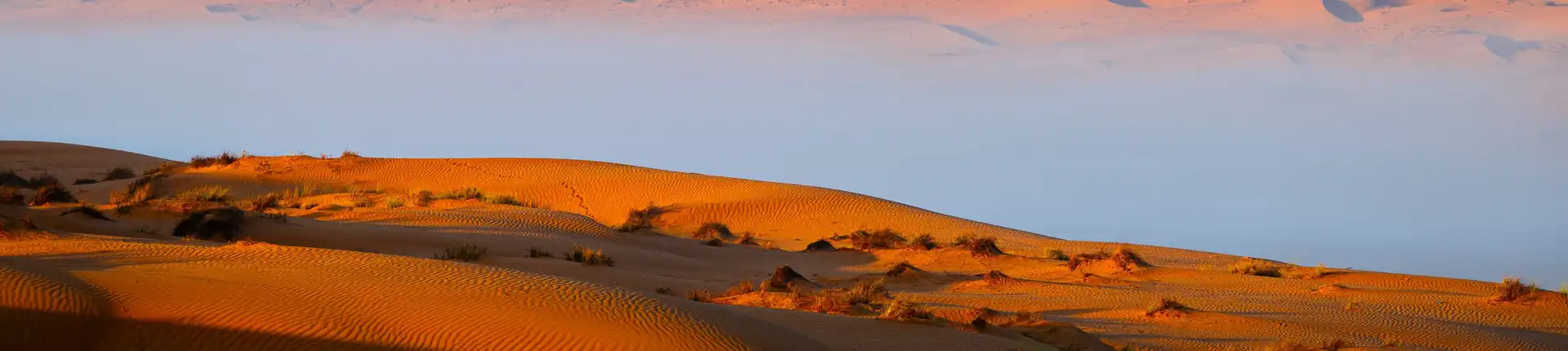
An Ultimate Oman Travel Guide


Oman is one of the easiest destinations in the region for Saudi travelers to turn a long weekend or a few free days into a completely different kind of trip. You can fly into Muscat for a coastal and mountain escape, drive across the Empty Quarter from Saudi Arabia, or head directly to Salalah during Khareef for mist, greenery, and cooler summer weather.
The country is especially rewarding for self-drive trips, with routes connecting historic towns, mountain villages, deep wadis, desert camps, and the Arabian Sea. The key is choosing the right region for the season, and giving each part of Oman enough time rather than trying to cover the whole country in one trip.
Quick Reference — Oman for Saudi Travelers
Topic | What to Know |
| Entry for Saudi citizens | Saudi and other GCC citizens do not require a visa |
| Currency | Omani rial (OMR); for rough budgeting, 1 OMR ≈ SAR 9.75 |
| Main airports | Muscat International Airport (MCT) and Salalah International Airport (SLL) |
| Best general road-trip season | October–April |
| Khareef in Salalah | Mid-June–September |
| Jabal Akhdar access | A suitable 4WD is required |
| Best for a short escape | Muscat, Nizwa & Jabal Akhdar |
| Best summer escape | Salalah during Khareef |
| Best longer road trip | Muscat, mountains, Sharqiyah Sands & the eastern coast |
Oman’s Foreign Ministry confirms that citizens of GCC countries, including Saudi Arabia, do not require a visa to enter Oman. Different rules apply to non-Saudi residents and other accompanying travelers, so check the requirements for each traveler’s nationality and residency status before departure.
The Omani rial is pegged to the US dollar. For rough budgeting, 1 OMR ≈ SAR 9.75 is a useful reference. Actual card, bank, and exchange-provider rates may vary slightly.
Getting to Oman from Saudi Arabia
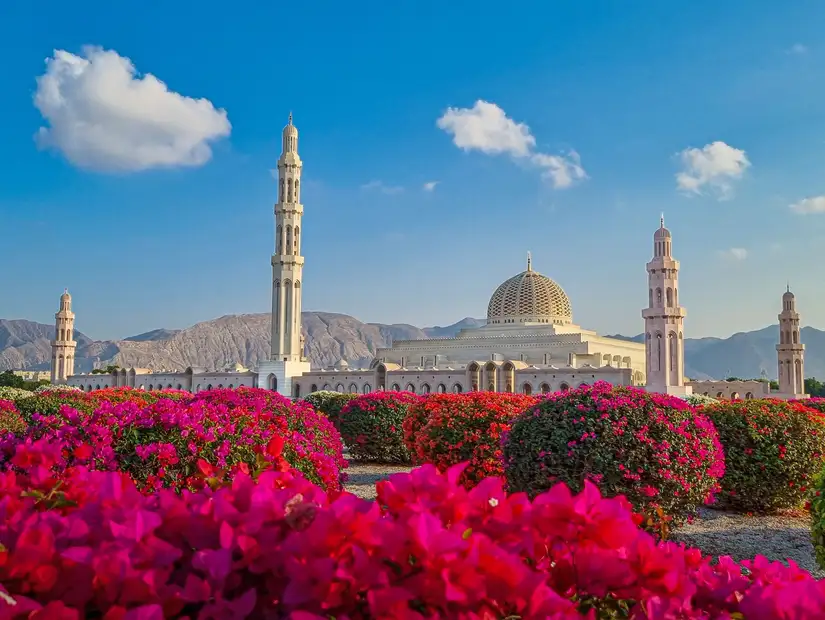
Saudi travelers have two practical ways to reach Oman: fly into Muscat or Salalah, or drive directly across the Empty Quarter. For a short trip, flying is usually the easier option. Muscat is the main gateway for northern Oman, while Salalah is the better choice when Dhofar and Khareef are the focus.
Flights from Saudi Arabia to Oman
Nonstop flights are available on several Saudi–Oman routes. Muscat has direct connections with major Saudi cities, while Salalah also receives nonstop services from cities including Riyadh, Jeddah, and Dammam, particularly around the Khareef travel period.
Routes, operating days, and frequencies can change by season and travel date, so check current availability on WINGIE before booking.
Route | Approx. nonstop time |
| Riyadh → Muscat | About 2 hrs |
| Jeddah → Muscat | About 2 hrs 55 min |
| Dammam → Muscat | About 1 hr 45 min |
| Riyadh → Salalah | About 2 hrs 25 min |
| Jeddah → Salalah | About 3 hrs 20 min |
| Dammam → Salalah | About 2 hrs 30 min |
Flight prices can change frequently depending on travel dates, availability, airline, baggage allowance, and demand. Khareef is an especially popular period for Salalah, while Eid and Saudi school holidays can also increase demand for both flights and accommodation.
Entering Oman from Saudi Arabia by Road
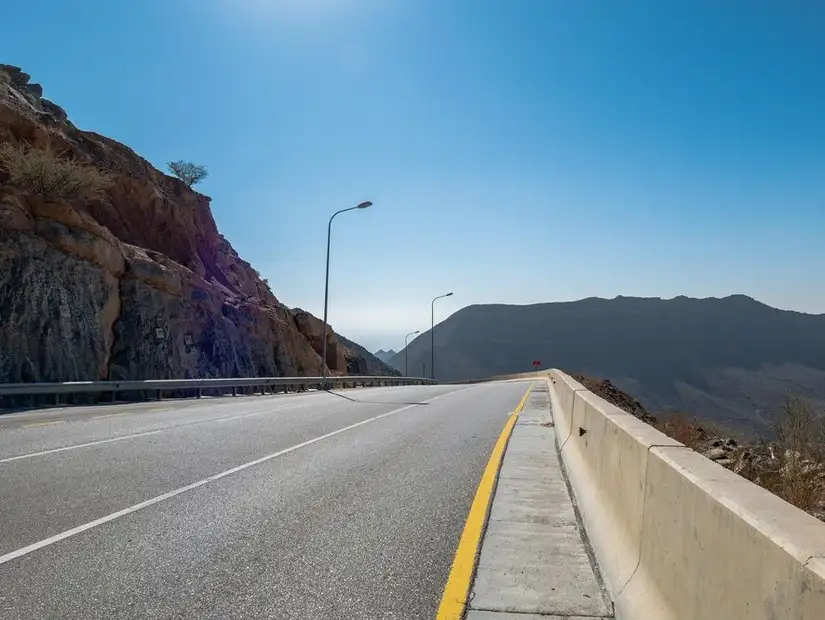
The direct Saudi–Oman road opened in 2021, allowing travelers to cross the Empty Quarter without driving through the UAE. The route connects the Saudi side near Al-Batha with Oman through the Rub’ al Khali crossing.
The Saudi section runs for approximately 564 km from Al-Batha toward the border, while the full connection from Al-Batha to Ibri in Oman covers around 725 km. The Saudi crossing is known as the Rub’ al Khali or Empty Quarter Border Crossing, with Ramlat Khaylah on the Omani side.
This is a long, remote desert drive. Start with a checked vehicle and plenty of fuel. Before leaving Saudi Arabia, confirm that your registration, driving licence, and insurance are valid for Oman. If the vehicle is not registered in your name, check whether additional authorization is required.
Carry drinking water, keep phones charged, download offline maps, and avoid building a tight itinerary around an estimated border-crossing time during busy travel periods.
Best Time to Visit Oman
There is no single best month for every part of Oman. Northern Oman and Dhofar have very different summer conditions.
Period | Best for | What to Expect |
| October–April | Muscat, Nizwa, mountains, desert, coast | Generally the most comfortable period for road trips and outdoor activities |
| November–March | Hiking & mountain trips | Cooler days and potentially cold mountain evenings |
| June–August | Salalah & Dhofar | Khareef conditions; greener landscapes, mist and cooler weather |
| June–August | Muscat & northern lowlands | Very hot conditions; daytime temperatures can reach around 35–45°C |
| Mid-June–September | Salalah during Khareef | Temperatures commonly around 20–28°C with cloud, mist and seasonal rain |
Oman’s official tourism guidance puts summer temperatures in many lowland areas at roughly 35–45°C, while Dhofar during Khareef is considerably cooler at around 20–28°C. Mountain areas such as Jabal Akhdar and Jebel Shams can also be significantly cooler than the lowlands.
If your dates overlap with Eid or Saudi school holidays, expect stronger demand on popular flight routes and in family resorts. During Ramadan, opening hours at some attractions, restaurants, and businesses may also change.
Which Oman Escape Is Right for You?
Muscat & Daymaniyat Islands — Best for a Quick Coastal Escape
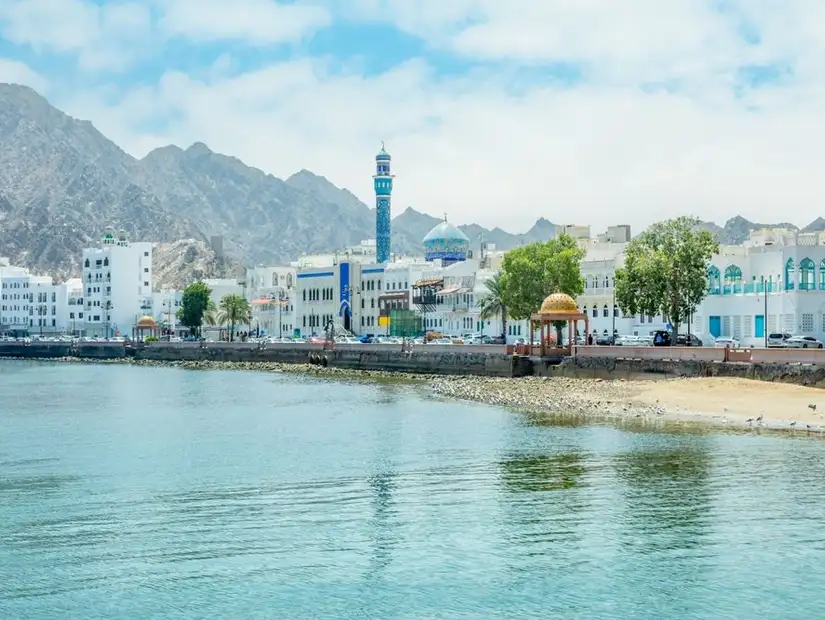
Muscat works particularly well for first-time visitors because a short stay can combine Sultan Qaboos Grand Mosque, Muttrah Corniche, Muttrah Souq, the coast, and a boat trip without requiring a long overland itinerary.
For snorkeling and diving, the Daymaniyat Islands add a very different side to the trip. Oman’s tourism platform describes the protected islands as around a 40-minute boat ride from Muscat, making them practical for a half-day or full-day excursion.
Ideal stay: 2–3 nights
Best for: first visits, couples, families, coastal weekends, diving and snorkeling
Getting there: Fly into Muscat International Airport (MCT)
Nizwa & Jabal Akhdar — Best for a Mountain Weekend
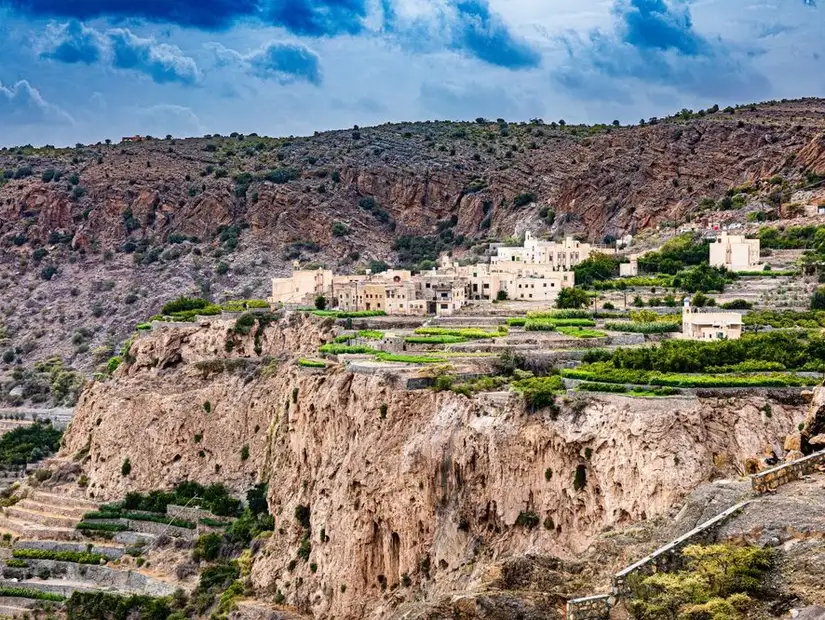
Nizwa is one of the easiest cultural stops to combine with Muscat. The drive from Muscat to Nizwa is approximately 159 km and around 1 hour 45 minutes, depending on traffic and your starting point. Explore Nizwa Fort, the souq, old streets, and the surrounding date-growing landscape before continuing into the Al Hajar Mountains.
Jabal Akhdar is known for terraced orchards, mountain villages, hiking trails, cooler temperatures, and mountain resorts. From Muscat, allow roughly 2 hours 20–30 minutes depending on traffic, stops, and your exact destination.
A suitable four-wheel-drive vehicle is required for the ascent to Jabal Akhdar. Do not arrive in a standard sedan assuming you will be able to continue uphill.
Ideal stay: 2–3 nights
Best for: families, couples, mountain scenery, hiking, resorts and cooler weather
Jebel Shams — Best for Hiking & Dramatic Scenery
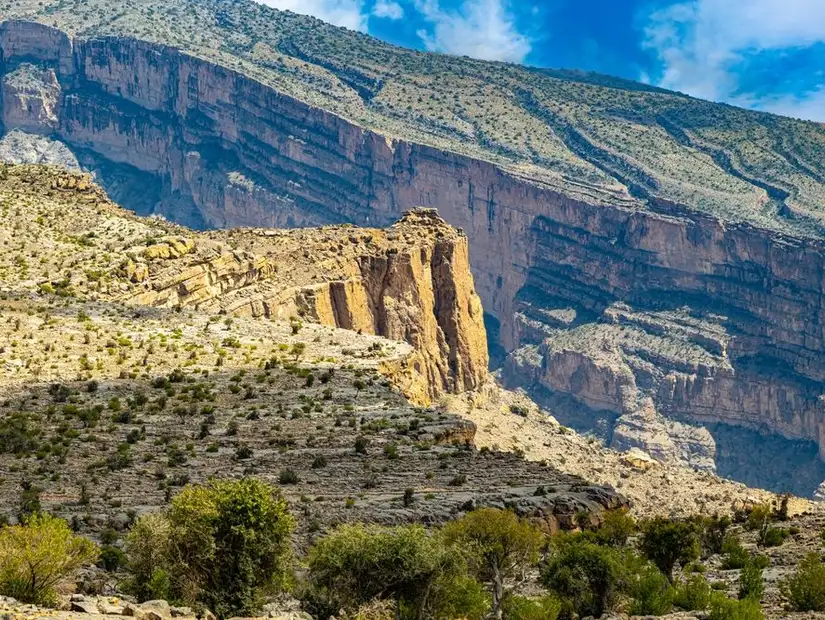
Jebel Shams overlooks Wadi Ghul and is known for some of Oman’s most dramatic mountain scenery, including the popular Balcony Walk. From Nizwa, the journey is approximately 85 km and around 1 hour 50 minutes, depending on road and weather conditions. A suitable 4WD is the safer choice for mountain access.
The Balcony Walk includes exposed sections and steep drops, so it is better suited to travelers comfortable with heights and mountain trails. Bring proper footwear, enough water, sun protection, and warmer layers during the cooler months.
Ideal stay: 1–2 nights
Best for: hikers, couples, solo adventure travelers, mountain views and outdoor trips
Sharqiyah Sands & Wadi Bani Khalid — Best for Desert Adventure
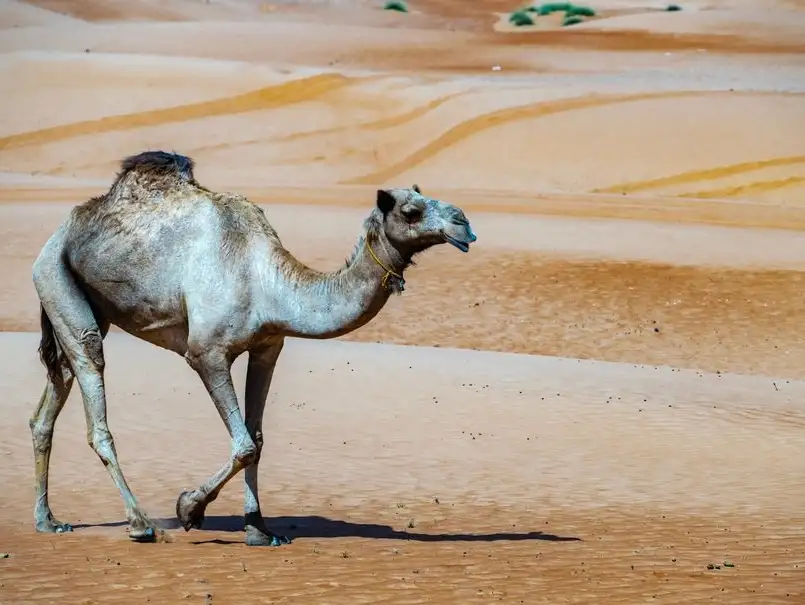
For a classic Oman road trip, combine Sharqiyah Sands with Wadi Bani Khalid. A night in the desert gives you sunset, open skies, and a slower pace, while the wadi adds pools, palms, and rocky scenery.
If your camp requires driving onto the dunes, use a suitable 4WD or arrange a transfer with the accommodation. Some desert camps provide meeting points where guests can leave standard vehicles and continue with an experienced local driver. Never enter or remain in a wadi when heavy rain or flash flooding is possible.
Ideal stay: 1–2 nights
Best for: families with older children, couples, desert camps, wadis and road-trip variety
Sur & Wadi Shab — Best for a Coastal Road Trip
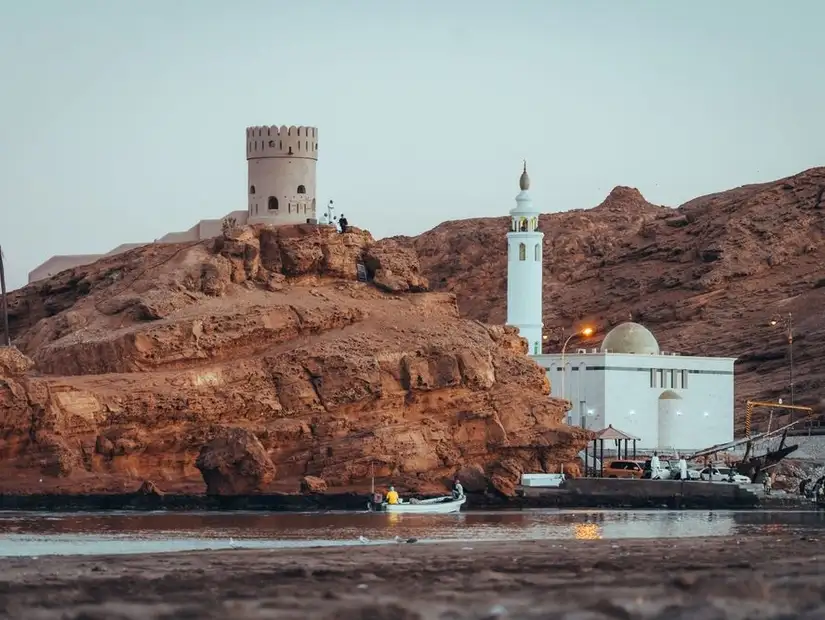
Wadi Shab lies roughly 155 km from Muscat by road, with the drive taking around 2 hours 20 minutes depending on traffic and stops. The experience involves walking and, for those continuing deeper into the wadi, swimming. Wear shoes with good grip and protect phones, wallets, and other valuables from water. Continue toward Sur for a quieter coastal stop. With more time, add Ras Al Hadd or nearby turtle-reserve experiences rather than returning immediately to Muscat.
Ideal stay: 1–2 nights
Best for: active travelers, couples, coastal scenery, hiking and swimming
Salalah — Best Summer Escape During Khareef
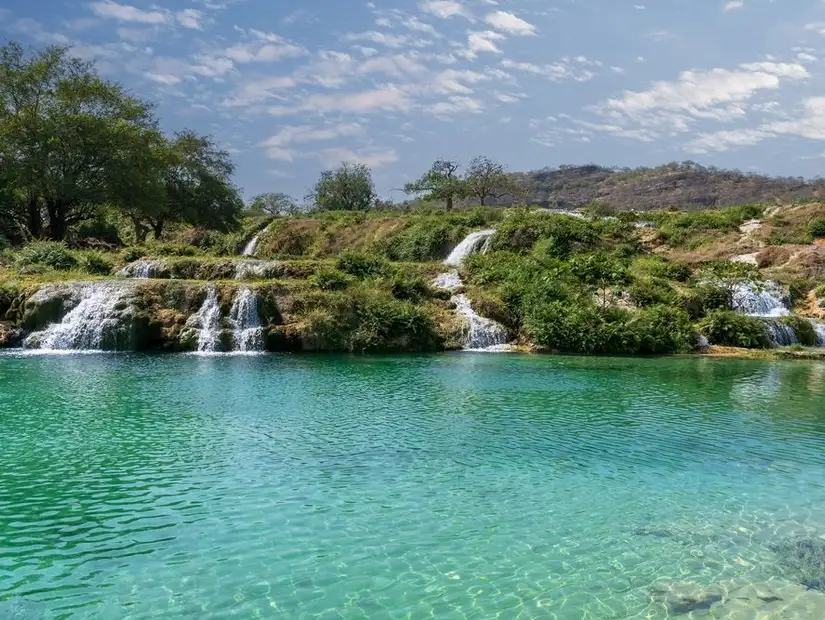
Salalah deserves its own trip rather than being casually added to a northern Oman itinerary. Muscat and Salalah are roughly 1,000 km apart by road. Driving takes around 11 hours before substantial rest stops, which makes combining the two cities by road impractical for most short holidays. For Saudi visitors taking a three- to five-night Khareef break, flying directly into Salalah International Airport (SLL) is usually much more practical.
Nonstop flights to Salalah are available from Saudi cities including Riyadh, Jeddah, and Dammam on selected dates and seasonal schedules, particularly around Khareef. Check your exact travel dates on WINGIE before planning around a direct flight.
Khareef generally runs from mid-June through September. During this period, monsoon conditions bring mist, lower temperatures, green mountains, flowing wadis, and seasonal waterfalls to parts of Dhofar. Typical Khareef temperatures are around 20–28°C, compared with summer temperatures that can exceed 40°C in parts of northern Oman.
Do not expect a conventional sunny beach holiday during Khareef. Cloud, drizzle, mist, and wet roads are part of the experience. Build the trip around scenic drives, viewpoints, Wadi Darbat, Dhofar’s green landscapes, and its frankincense heritage.
Ideal stay: 3–5 nights
Best for: Saudi summer travel, families, couples, greenery, scenic drives and nature
Best season: Mid-June–September for Khareef
3 Oman Road Trips for Saudi Travelers
Trip | Suggested Length | Route | Key Driving Figures |
| Mountain Weekend | 3–4 days | Muscat → Nizwa → Jabal Akhdar | Muscat–Nizwa: 159 km / ~1 hr 45 min; allow around 2 hrs 20–30 min from Muscat to Jabal Akhdar |
| Classic Northern Oman Loop | 5–7 days | Muscat → Nizwa → Jebel Shams → Jabal Akhdar → Sharqiyah Sands → Wadi Bani Khalid → Muscat | Nizwa–Jebel Shams: ~85 km / ~1 hr 50 min; allow extra time for mountain and desert roads |
| Coast + Desert | 4–5 days | Muscat → Wadi Shab → Sur → Sharqiyah Sands → Wadi Bani Khalid | Muscat–Wadi Shab: ~155 km / ~2 hrs 20 min; subsequent times depend on camp and wadi access |
For a first self-drive trip, Muscat + Nizwa + Jabal Akhdar is the easiest route to manage. For five days or more, adding the desert or eastern coast gives the trip greater variety. Salalah is better treated as a separate Dhofar itinerary rather than an extra stop on a northern loop.
Quick 3-Day Oman Itinerary
Day 1 — Muscat
Arrive in Muscat and keep the first day local. Visit Sultan Qaboos Grand Mosque, explore Muttrah Souq and Muttrah Corniche, and spend the evening by the coast.
Day 2 — Muscat → Nizwa → Jabal Akhdar
Drive approximately 159 km to Nizwa, allowing around 1 hour 45 minutes. Explore the fort and souq before continuing toward Jabal Akhdar in a suitable 4WD. Overnight in the mountains.
Day 3 — Jabal Akhdar → Muscat
Spend the morning at mountain viewpoints, villages, or an easy walking route before driving back toward Muscat. If you have an evening flight, leave a generous buffer for the descent, traffic, refueling, and rental-car return.
For a three-day trip, resist the temptation to add the desert, Wadi Shab, and Jebel Shams as well. Oman rewards slower itineraries.
How Much Does an Oman Trip Cost?
Oman can work at different budgets, but accommodation, vehicle type, travel season, and itinerary make a major difference.
The figures below are planning benchmarks checked in August 2026, not guaranteed rates. For Saudi readers, SAR equivalents use approximately 1 OMR = SAR 9.75.
Expense | Approximate Planning Benchmark |
| Muscat 3-star hotel | Around OMR 14/night ≈ SAR 140 |
| Muscat 4-star hotel | Around OMR 29/night ≈ SAR 280 |
| Salalah 3-star hotel | Around OMR 27/night ≈ SAR 265 |
| Salalah 4-star hotel | Around OMR 50/night ≈ SAR 490 |
| Medium rental car in Muscat | Around OMR 8–9/day ≈ SAR 80–90 |
| SUV rental in Muscat | Around OMR 22/day ≈ SAR 215–220 |
| Desert camp example | From around OMR 35 per adult/night ≈ SAR 340 |
| M91 petrol | OMR 0.229/L ≈ SAR 2.23/L |
| M95 petrol | OMR 0.239/L ≈ SAR 2.33/L |
Hotel and rental-car figures are averages checked in August 2026 and can vary significantly depending on property, vehicle, dates, occupancy, and demand.
Salalah prices can rise during Khareef, particularly during busy travel periods, so compare accommodation and flights together before committing to dates.
A standard SUV listing does not automatically mean the vehicle is an appropriate 4WD for Jabal Akhdar or dune driving. Confirm the drivetrain and the rental company’s restrictions before booking.
The petrol figures above are Oman Oil Marketing Company retail prices for August 2026. Fuel prices can change, so check current rates before a long road trip.
Desert accommodation also varies widely. As one current example, Nomadic Desert Camp lists twin-sharing accommodation from around OMR 35 per adult per night, including dinner and breakfast. Treat this as an example rather than a typical price for every desert camp.
Rather than relying on a single all-in trip estimate, build your budget from the parts that apply to your itinerary: accommodation, vehicle type, fuel, meals, activities, and flights. This is particularly important for Khareef, when Salalah accommodation and airfares can move quickly with demand.
What to Know Before Driving in Oman
Before a self-drive trip, check:
- Vehicle registration and required ownership documents
- Driving licence validity
- Insurance coverage for Oman
- Rental-company rules if hiring a vehicle
- Tyres, spare tyre, brakes, and fluid levels
- Fuel before remote routes
- Drinking water
- Phone charger and power bank
- Offline maps
- Weather and road alerts
- Whether your route requires a 4WD
- Hotel or desert-camp access instructions
Visitors on short stays may generally use their home-country driving licence in Oman, but rental companies can apply their own documentation and eligibility requirements. Confirm the rules with your rental provider before travel rather than assuming an International Driving Permit is or is not required in your individual case.
Do not follow an online map blindly onto an unpaved mountain or desert route simply because it appears shorter. Road conditions can change, and some routes require both a suitable 4WD and experience driving off-road.
Getting Around Muscat Without a Car
- You do not necessarily need a rental car if your trip is limited to Muscat. Taxis are widely used, and app-based taxi services are available in the capital.
- A rental car becomes much more useful when your itinerary includes Nizwa, the mountains, the eastern coast, wadis, or multiple stops outside the city.
Traveling as a Family, Couple or Solo
- Families: Muscat, Nizwa, Jabal Akhdar resorts, and Salalah are among the easiest options to structure around family travel. For wadis and desert trips, check access conditions and activity suitability for children in advance.
- Couples: Muscat combined with a mountain resort, a desert night, or a Salalah road trip gives a good mix of scenery and slower travel.
- Solo and adventure travelers: Jebel Shams, Wadi Shab, and the eastern coast offer more active itineraries. For remote hiking or off-road routes, share your plans, check weather conditions, and avoid taking unnecessary risks alone.
Packing & Cultural Etiquette
- Oman is culturally familiar for Saudi visitors, but respectful clothing remains important in mosques, traditional villages, souqs, and public areas. Swimwear is best kept to beaches, hotel pools, and suitable swimming locations.
- For active trips, pack hiking shoes, sun protection, plenty of water, and a light layer for mountain evenings. During Khareef, add shoes that can handle wet ground and a light rain layer.
- The Omani rial is the local currency. Cards are widely useful in cities and larger businesses, but carrying some cash remains practical for smaller shops, markets, and remote stops.
Frequently Asked Questions
- Do Saudi citizens need a visa to enter Oman? No. Saudi citizens, like other GCC citizens, do not require a visa to enter Oman. Travelers should still check current entry requirements before departure, particularly when traveling with non-GCC citizens.
- Can I fly directly to Oman from Saudi Arabia? Yes. Nonstop flights operate on several Saudi–Oman routes, including services to Muscat. Salalah also receives nonstop flights from Saudi cities on selected dates and seasonal schedules, particularly around Khareef. Always check current availability for your travel dates.
- Can I fly to Salalah for Khareef from Saudi Arabia? Yes. Salalah International Airport uses the code SLL, and nonstop services from Saudi Arabia are available on selected schedules. Because Khareef is a major summer travel period, compare flights and accommodation early for your dates.
- How much are flights from Saudi Arabia to Oman? Airfares change frequently according to departure city, travel date, airline, availability, baggage allowance, and seasonal demand. Rather than relying on a fixed fare in a travel guide, search WINGIE for your specific dates to compare current prices to Muscat and Salalah.
- How far is Salalah from Muscat? Muscat and Salalah are roughly 1,000 km apart by road, with driving time around 11 hours before substantial breaks. For a short holiday, flying between northern Oman and Dhofar is generally much more practical than adding Salalah to a Muscat road trip.
- Which border crossing connects Saudi Arabia directly with Oman? The direct route crosses the Empty Quarter through the Rub’ al Khali border connection, linking the Saudi side near Al-Batha with Oman. The road opened in 2021 and removed the need to drive through the UAE.
- Do I need a 4WD to drive in Oman? Not for every trip. Muscat, Nizwa, Sur, Salalah, and many major paved routes can be reached in a standard vehicle. A suitable 4WD becomes important or required for certain mountain, desert, and off-road routes.
- Do I need a 4WD for Jabal Akhdar? Yes. A suitable four-wheel-drive vehicle is required for the ascent to Jabal Akhdar.
- When is the best time to visit Salalah for Khareef? Khareef generally runs from around mid-June through September. During this period, Dhofar experiences cooler temperatures, mist, greenery, and seasonal rain while much of northern Oman is significantly hotter.
- Can Saudi residents who are not Saudi citizens enter under the same rules? Not necessarily. Visa-free GCC entry applies to GCC citizens. Travelers who are Saudi residents but hold another nationality should check the current Oman entry or eVisa requirements that apply to their nationality and residency status before departure.
- What is the best Oman trip for a long weekend? For a relaxed break, fly into Muscat and stay around the capital and coast. For more variety, Muscat → Nizwa → Jabal Akhdar makes a strong three- or four-day itinerary during the cooler months. For a Saudi summer long weekend, fly directly to Salalah and focus the trip on Dhofar rather than trying to combine it with Muscat.
Oman works best when you resist the temptation to see everything at once. Choose the coast, mountains, desert, or Dhofar according to the season and the time you have, then allow the journey itself to become part of the trip.
For a first visit, Muscat and the mountains provide an easy introduction. For a longer adventure, add Sharqiyah Sands and the eastern coast. During the Saudi summer, give Salalah enough time to enjoy Khareef without rushing between viewpoints. Ready to plan your Oman trip? Book your Oman flight on WINGIE and choose the route that fits your dates, budget, and travel style.
You may also like:
- Top 7 Coastal Towns in Oman for a Quiet Weekend Escape
- Top Mountain Villages in Oman
- An Ultimate Guide to Jebel Akhdar in Oman
- Top Attractions in Muscat
- An Ultimate Guide to Henna Art in the MENA Region
- Top Spots for Urban Night Photography in the MENA Region
- Top Green Hotels and Resorts in the MENA Region for Eco-Friendly Stays
- Top Libraries in the MENA Region
- Top Spice Souqs in the MENA Region
- The Most Famous Castles in the MENA Region
- The Most Beautiful Natural Wonders in the MENA Region
- Top Camping Destinations in the MENA Region
- Best 15 Cities in Morocco to Visit
- Top 10 Family-Friendly Destinations
- Top Amusement Parks in Lebanon
- Top Attractions in Jordan
- Top 10 Restaurants in Cairo
- Top Oases in the MENA Region
- Top Destinations for the Eid Holiday in the MENA Region
- Top Archaeological Destinations in the MENA Region
- Top Diving Destination in the MENA Region
- Top Desert Safari Destinations in the MENA Region

