Best Price
Flydubai

26 Oct, Mon
Tabuk – Manila
1d 6h 25m
1 stop
TUU–MNL
Flydubai
Flydubai
Flydubai
Flydubai
Flydubai
Flydubai
Flydubai
Flydubai
Flydubai
Last update: 22 October 2026 00:47





Information compiled by AI. For the most up-to-date information, contact the airline.
Taxi
Taxi and Uber are the most popular way of transportation in Tabuk city center, both by tourists and locals. As for getting to Tabuk Regional Airport, you can find numerous taxi companies in the city center, as well as ask for one from your hotel. Taxi prices may vary in several terms like distance, whether it’s day or night, on Sundays, and due to your baggage. Generally, taxi prices start from 15-20 USD.
Rental Car
There are many rental car companies in Tabuk, where you can rent a car or private shuttles for transportation or get around the city center. On average, a rental car in Tabuk city center costs around 35-45 USD per day, but prices can change according to car type, duration of rent, mileage, etc. If you are planning to rent a car to get to Tabuk Regional Airport, do not forget to ask if you can leave the car at the airport before your ride.
Hotel Shuttles
Hotel shuttles are the best options for transportation to Tabuk Regional Airport, especially when you travel with baggage and certainly in large groups. Besides you can avoid the hustle of arranging a ride for the last minute before your flight. For this reason, you can get in touch with hotels that provide shuttle services from and to the airport, share your flight time, and ask whether they charge for this service.
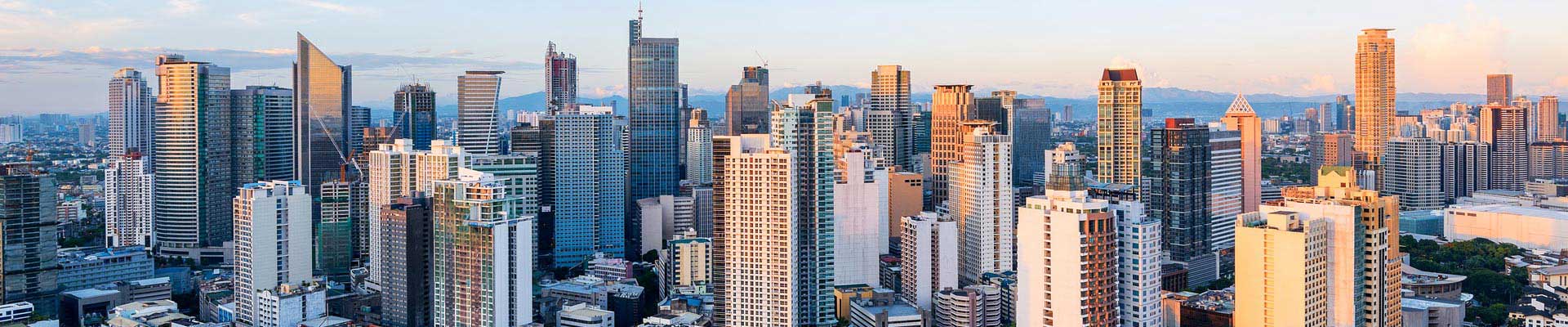
Known as the biggest city in the Philippines, Manila is a metropolis in the Metro Manila region that is composed of many different provinces. Malate, one of the sixteen towns that make up Manila, hosts hotels. While Ermita is the most frequent destination for tourists and entertainment, Intramuros is the historical part of the city. San Miguel and Sampaloc are university districts, while Paco is the capital of the working class. Manila, known as the heart of the education, business and transportation in the Philippines, is a delightful choice for tourists with its forests and for its spectacular islands. Ninoy Aquino International Airport welcomes travelers who want to visit this city.
In Manila, the most common vehicles used in urban transportation are the rail system and the bus. In addition, besides these most frequently used means of urban transportation, other older means of transportation such as phaetons, three-wheeled vehicles and mini-buses are also used. When you use public transport in the city, you can take advantage of single use tickets, or the special tickets that you can load money on. We advise you to buy these special tickets, especially if you travel frequently, so that you can save time avoiding the long ques to buy ticket every time.
Most means of public transportation does not depart in time, so we advise you not to rely on the schedules. The public transport is mostly very cramped and full. For this reason, we recommend that you protect your valuables during your travels. You can also use taxis and bicycles and phaetons that serve as taxis to travel faster and practically.
Since the city's main attractions are close to each other, it is possible to walk. In addition, there are ferryboats within the city that can be reached from many ports in the Port Area near the Pasig River. If you want to travel to neighboring cities, you can also take advantage of intercity bus and train services. One of the biggest problems of Ninoy Aquino International Airport is that the inter-terminal transportation is not very strong. Unlike many airports, you cannot reach the terminals of the airport, which has four terminals, on foot.
To travel between the terminals you need to get buses and jeepneys, and pass through crowded streets. While Terminal 1 is used for international flights, Terminal 2 serves to flights of Philippine Airlines. Terminal 3 hosts domestic flights, while Terminal 4 hosts eligible flights and international flights rarely.
Buses depart from the immediate exit of the arriving passenger section and take the passengers to many parts of the city. In some cases, you may need to transfer to a train, based on your destination. At some times the buses can be very crowded. Under normal conditions, different buses operate to different parts of the city; but some buses can change their route at certain times and travel through many parts of the city. These buses are going to Manila, as well as to the cities of Makati and Quezon. Besides, buses are among the frequently preferred options for urban transport.
The bus lines offer an important public transport alternative, which is used to reach to the points where the train lines do not reach, serving the whole city.
Land vehicles, which are called Jeepneys in the Philippines, can carry a large number of passengers and they are used as minibuses. Jeepneys, which are usually very crowded, are the most popular public transport services in the country. These have gained a traditional iconic character with their special decoration. You can use Jeepneys to reach many of the places you want to go in town. You can easily find Jeepneys near buses at the airport exit. These vehicles provide transportation services from the airport to many parts of the city, just in the case of buses.
Train is a cheap, fast and practical means of public transport that is not affected by the traffic jam,. Nevertheless, it is necessary to remind that trains are as crowded as all other means of public transport. Trains, known as LRT (Light Rail Transit System), travel throughout the entire Metro Manila region, including Manila. Although it uses a light rail system, the infrastructure is quite similar to that of metro. The train lines do not provide a direct service to the airport.
But you can transfer to these train lines from most buses and jeepneys coming from the airport. There are two different train lines in the light rail system. The green line, LRT 1, starts at Baclaran Station, in the southernmost part of city, and travels up to the Roosevelt Station, in the north of the city, following the road by the Manila Bay, in the west of the city. The blue line, LRT 2, runs parallel to the Pasig River, traveling to west from the east. This line provides transfer opportunity to green LRT and yellow MRT (metro) lines.
Metro, just like train, does not provide a direct transport service to the airport. It is possible to transfer to the trains from buses and jeepneys departing from the airport. The Metro, known as the MRT (Metro Rail Transit System), operates similarly to the light rail system. The MRT line is known as the third (yellow) line. With this line, you can transfer to LRT 1 line at Roosevelt Station. This line connects to Taft Avenue Station, the southern tip of the green line, on the southernmost part of the city, starting from the North Avenue Station, which is the first stop after the transfer, and continuing to the south of the city in the east direction. In short, it is possible to say that LRT and MRT lines draw a circle around the city, being connected from the very center of this circle.
PNR (Philippine National Railways), the orange line, is operating on the heavy rail system with a single carriage engine, called railcar. These vehicles depart every half an hour and are usually preferred for transportation between neighboring cities in Metro Manila region.
The most comfortable option to get to the city from the airport is, of course, taxi. However, taxi fares are much higher compared to public transport. The airport taxis are usually yellow. These taxis, controlled by the center, have the authority to stop at the entrance of the airport. Apart from that, we recommend that you stay away from the taxis serving to the hotels in the city. These taxis can cost you much higher than the taxis you can find on the street. Make sure that the taximeter is working during your journey; the drivers who understand that you are foreigners can try to charge you over normal by not turning on the taximeter. The taxis known as Pedicab, bikes mounted in cabins for two, can be used for short distances. However, we recommend you not to take these without a local with you unless you are very obliged to, for your safety. Tricycles, the three-wheeled taxis, are a practical option for traveling to the areas where it is difficult to reach with public transport. Pedicab and Tricycle vehicles have stops in central areas of the city.
If you do not want to spend time in the crowds of public transport and you will travel frequently, you can rent a car from the Rent a Car offices located at the airport or book your car online before your flight. However, we remind you that the traffic inside the city can sometimes be very cramped.
5-Day Forecast • Min / Max Temperature


| Airline | Price | Standard inclusions |
|---|---|---|
 Flydubai Flydubai | 1,330 SAR | Paid Change (up to 48 hours) / No Refund / 1 piece X 7 kg cabin baggage / 1 piece X 30 kg checked baggage / Complimentary Refreshments / In-flight Entertainment |
 Malaysia Airlines Malaysia Airlines | 3,844 SAR | — |
 Etihad Airways Etihad Airways | 1,441 SAR | No changes allowed / No Refund / 1 piece X 7 kg cabin baggage / Complimentary Refreshments |
 Saudi Arabian Airlines Saudi Arabian Airlines | 1,500 SAR | Paid Change (up to 48 hours) / Partial Refund (up to 48 hours) / 1 piece X 7 kg cabin baggage / 1 piece checked baggage |
 Flynas Flynas | 1,521 SAR | — |
 Qatar Airways Qatar Airways | 4,328 SAR | Paid Change (up to 48 hours) / Partial Refund (up to 48 hours) / 1 piece X 7 kg cabin baggage / 1 piece X 35 kg checked baggage / Complimentary Refreshments |
Last update: 18.10.2026
Trusted by travelers, with over 18 million installs. Download the WINGIE app now and enjoy great hotel deals!
DOWNLOAD NOW