An Ultimate Guide to Secret Gardens and Patios of Historic Jeddah


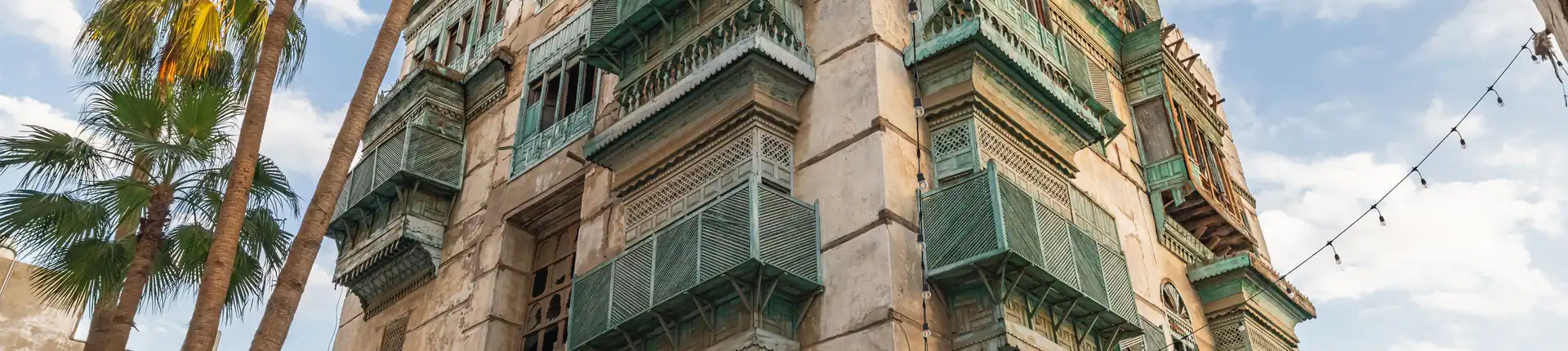
Beyond Jeddah’s modern waterfront, busy markets, and Red Sea coastline lies a quieter side of the city. Inside the narrow streets of Historic Jeddah, the Gate to Makkah, known locally as Al Balad, centuries-old houses reveal a different rhythm of life. Coral stone walls, carved wooden balconies, shaded passages, and hidden interior courtyards tell the story of a city shaped by trade, climate, and cultural exchange.
Recognized as a UNESCO World Heritage Site since 2014, Al Balad is one of Saudi Arabia’s most significant heritage districts. For travelers seeking authentic experiences, it offers the chance to step away from modern city life and explore the architectural traditions of old Jeddah.
The Architecture of the Hijazi Courtyard (Al-Finā’)
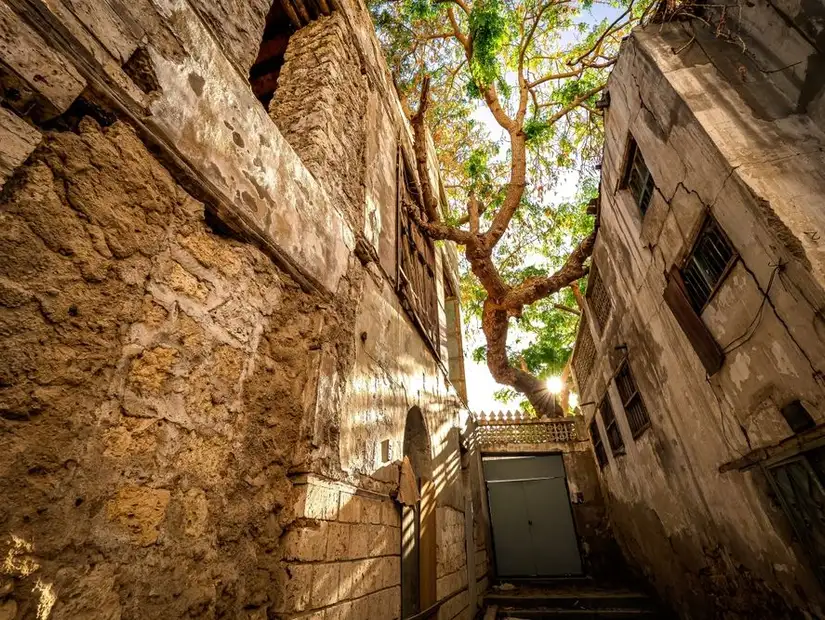
At the heart of traditional Jeddah homes was the courtyard, known in Arabic architecture as Al-Finā’. Unlike many modern homes designed around exterior views, traditional Hijazi houses often focused inward. The courtyard became the center of daily life, creating a private outdoor space protected from the surrounding streets.
These spaces served several important purposes:
A Natural Cooling System
Jeddah’s coastal climate has always brought challenges, especially heat and humidity. Courtyards helped improve airflow by allowing warm air to rise while creating shaded areas below.
The combination of shade, ventilation, and thick coral stone walls helped make homes more comfortable before modern air conditioning existed.
Privacy and Family Life
Traditional houses in Al Balad were designed around privacy. The courtyard allowed families to spend time outdoors while remaining protected from public view.
This inward-focused design was particularly important in densely built neighborhoods where homes stood close together.
A Place for Gathering
Courtyards were not simply architectural features. They were social spaces where families gathered, guests were welcomed, and everyday activities took place.
Walking through Al Balad today, these spaces offer a glimpse into a slower way of living that shaped Jeddah’s historic identity.
Hidden Gems You Must Visit in Al Balad
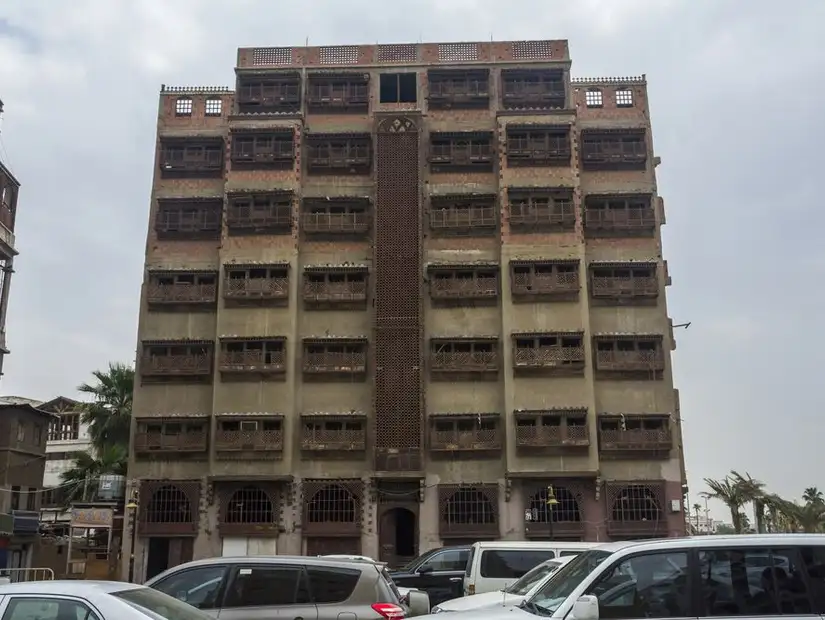
Exploring Al Balad is about looking beyond the main streets. Some of the district’s most memorable experiences come from stepping inside restored houses and discovering the details hidden behind their traditional facades.
Baeshen House: A Restored Window Into Old Jeddah
Baeshen House is one of the heritage houses that reflects the architectural character of old Jeddah. Like many historic homes in Al Balad, the building showcases the relationship between indoor and outdoor spaces through its courtyard layout, traditional seating areas, and restored architectural details. The house represents the type of merchant residence that once defined the district, when Jeddah was a major Red Sea trading center connecting Arabia, Africa, and Asia.
What to notice:
- Interior wooden details
- Traditional seating arrangements
- Courtyard proportions
- Decorative elements influenced by Jeddah’s trading connections
Nassif House (Bayt Nassif): The House of the Tree
Few buildings in Al Balad carry as much historical significance as Nassif House.
Built in the late 19th century, the house belonged to the Nassif family, one of Jeddah’s influential merchant families. It later became associated with an important moment in Saudi history when King Abdulaziz stayed there after entering Jeddah in 1925.
The house is also known as the “House of the Tree” because of the famous neem tree that grew in its courtyard. At a time when greenery was rare within the dense urban fabric of old Jeddah, the tree became a distinctive symbol of the residence. The open spaces inside Nassif House demonstrate how traditional courtyards balanced practicality with beauty.
Matbouli House Museum: Everyday Life Behind Historic Walls
For travelers interested in understanding how people lived in old Jeddah, Matbouli House Museum offers an intimate perspective. Unlike monumental landmarks, this house focuses on everyday domestic life. Its rooms, traditional objects, and architectural details help visitors understand how families used different areas of the home. The building reflects the traditional Hijazi house design, where courtyards, storage spaces, gathering rooms, and wooden balconies all had practical roles.
Look for:
- Traditional household objects
- Historic furniture
- Wooden Roshan details
- Small architectural features designed for coastal living
The Beauty of Roshan Balconies
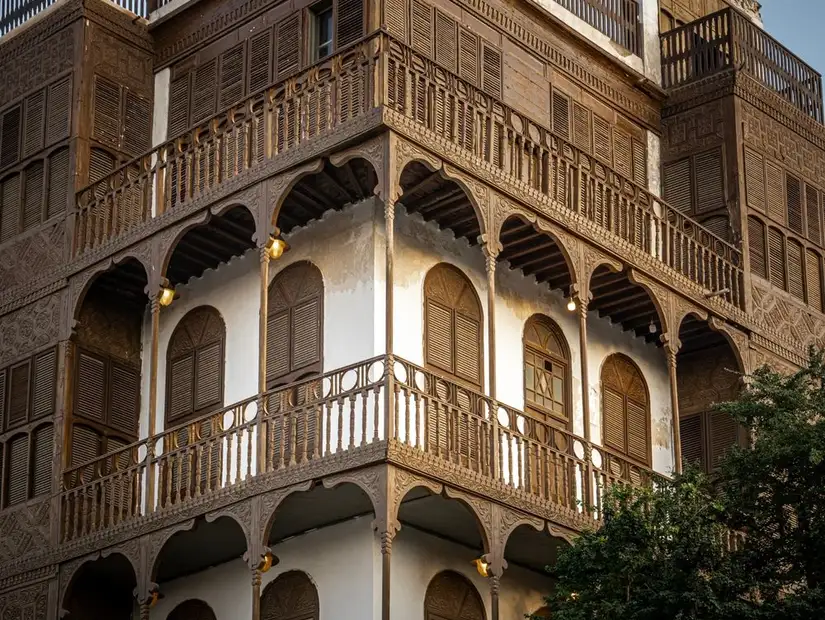
One of the most recognizable features of Al Balad’s historic homes is the Roshan, the traditional wooden window structure found throughout Hijazi architecture. These projecting wooden balconies were not only decorative. They helped improve airflow, provide shade, and create privacy while allowing residents to observe the street below.
Made with intricate wooden patterns, Roshans reflect the influence of Jeddah’s position as a historic port city. The architectural style absorbed ideas from different cultures that passed through the Red Sea trade routes.
For photographers, Roshans are among the best details to capture in Al Balad. Morning light creates softer shadows across the carved wood, while late afternoon light highlights their textures.
Modern Cafes Bringing Back the Courtyard Experience
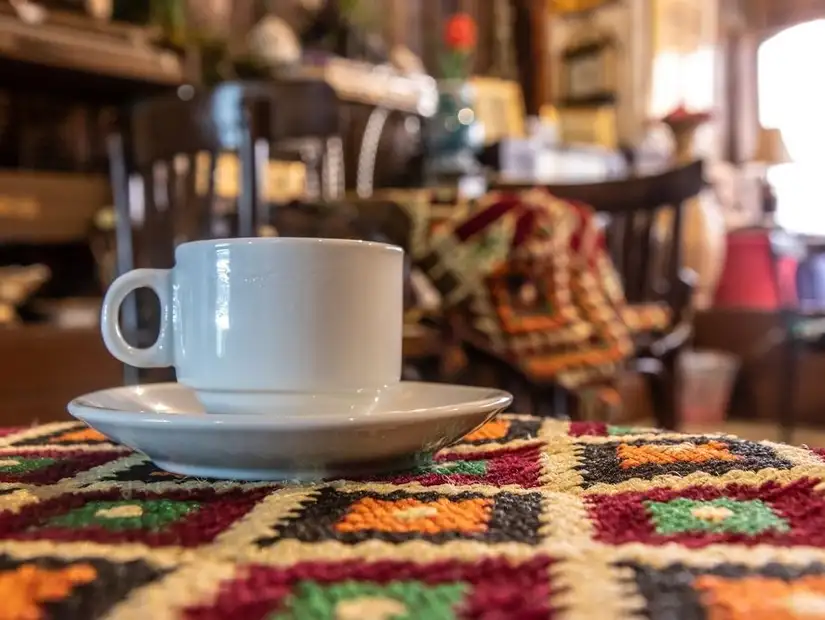
Today, Al Balad is experiencing a cultural revival. Alongside restoration projects, new cafes and creative spaces are bringing visitors back into historic buildings. Many of these venues focus on preserving the atmosphere of traditional courtyards while introducing contemporary experiences such as specialty coffee, local design, and cultural events.
When exploring the district, look for:
- Restored heritage houses converted into cafes
- Courtyard seating areas
- Spaces combining traditional architecture with modern interiors
A quiet coffee break inside a heritage courtyard is one of the best ways to experience the slower pace of Al Balad.
Practical Tips for Exploring Al Balad
- Visit during the cooler months: The cooler months are generally the most comfortable time to walk through Al Balad’s narrow streets.
- Choose the best time for photography: For softer light and fewer crowds, visit early in the morning. Late afternoon is ideal for capturing warm tones on the coral stone walls, while the evening is a great time to experience the atmosphere of the restored streets and cafes.
- Allow at least half a day: Plan to spend at least half a day exploring Al Balad properly. A slower visit gives you enough time to enter heritage houses, explore small streets, notice architectural details, and enjoy local food and coffee.
- Dress respectfully and comfortably: Since Al Balad is a historic cultural district, visitors should dress respectfully while choosing comfortable clothing suitable for walking.
Modern Jeddah continues to grow, but Al Balad preserves a different story. Behind its wooden doors and coral stone walls are courtyards that reveal how generations adapted architecture to climate, culture, and community life.
From Roshan balconies to restored heritage homes, every detail reflects the identity of a city shaped by the Red Sea. For travelers who want to experience a more authentic side of Saudi Arabia, Jeddah’s historic district offers a journey through architecture, memory, and everyday traditions.
The beauty of Al Balad is not always found in what is visible from the street. Many of its most fascinating spaces exist behind wooden doors, inside historic homes, and around quiet courtyards that were designed centuries ago for comfort, privacy, and connection. Planning a visit to experience Jeddah’s heritage is easier with WINGIE, where travelers can compare Jeddah flight options and find routes that fit their plans.
You may also like:
- Top Luxury Dining Experiences in Jeddah with a Sea View
- Top 30 Must-Visit Places in Jeddah
- Top 25 Malls in Jeddah
- Top 25 Restaurants in Jeddah
- The Best Seafood Restaurants in Jeddah
- Top 20 Family-Friendly Restaurants in Jeddah
- Best Restaurants on Prince Sultan Street
- Best Beaches in Jeddah
- Ultimate Guide to Almurjan Market in Jeddah
- Best Beaches for Women in Jeddah
- Best Restaurants for Breakfast in Jeddah
- An Ultimate Guide to Haifa Mall in Jeddah

